Businesses looking to build a multi-vendor marketplace increasingly follow the business models of platforms like Amazon, eBay, and Alibaba, which have become dominant players in global ecommerce. These marketplaces offer products from multiple independent sellers, giving customers broader selection, competitive pricing, and a more convenient shopping experience.
This growth highlights why scalable marketplace architecture and flexible vendor management systems have become critical for modern eCommerce businesses. If you want to build a successful multi-vendor marketplace, this guide covers the essential steps, technologies, and business models behind scalable eCommerce ecosystems. This guide covers marketplace development steps, key features, software solutions, monetization models, and scalability strategies.
This guide is designed for entrepreneurs, eCommerce businesses, B2B companies, retailers, and startups planning to launch a multi-vendor marketplace platform in 2026.
– Successful marketplaces usually start with a niche-focused MVP and scale gradually.
– API-first and headless architectures improve scalability and integration flexibility.
– Vendor onboarding, payments, automation, and product discovery directly affect marketplace growth.
– AI-powered search, personalization, and automation are becoming standard marketplace features in 2026.
What is a multi-vendor marketplace?
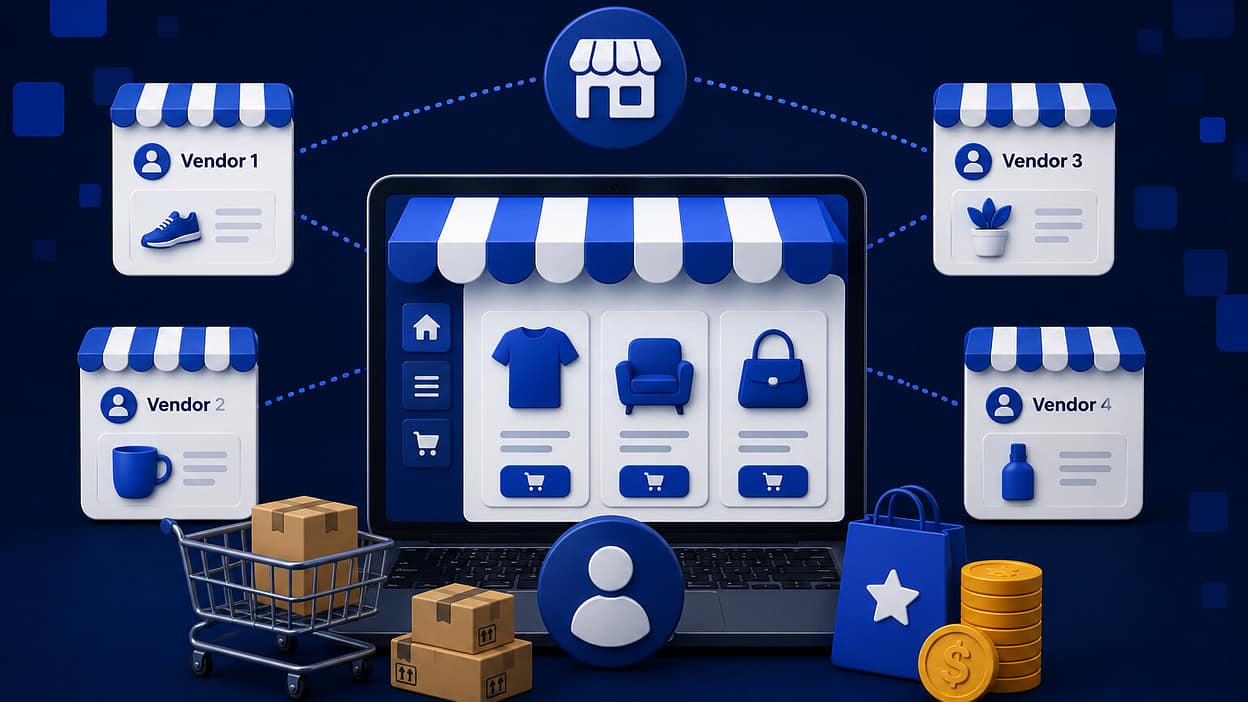
A multi-vendor marketplace is an eCommerce platform where multiple independent sellers offer products or services through a shared storefront. The marketplace owner manages infrastructure, payments, commissions, and customer experience while vendors manage their own inventory and orders.

Unlike traditional online stores managed by a single merchant, multi-vendor marketplaces operate as ecosystems with multiple independent sellers. Each vendor typically manages their own catalog, pricing, inventory, and fulfillment processes through a dedicated seller dashboard.
This model differs from a standard eCommerce website, where a single business controls the entire product catalog, pricing, and fulfillment process.
Customers benefit from broader product selection, competitive pricing, and the ability to purchase items from multiple vendors within a single checkout flow. Depending on the business model, the marketplace owner may also handle payments, commissions, dispute resolution, and customer support operations.
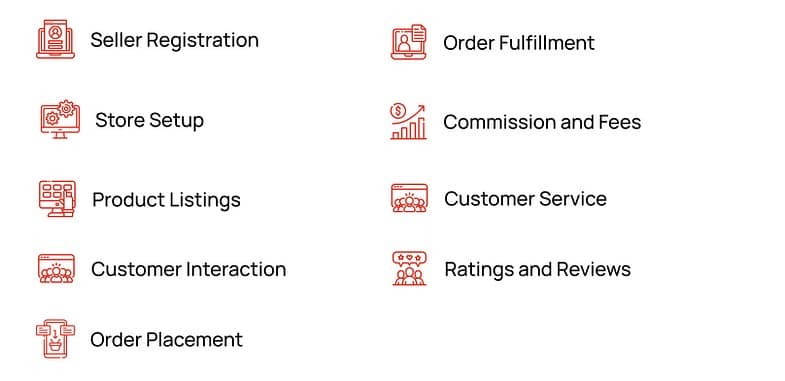
A multi-vendor marketplace provides a centralized online platform for sellers and typically works as follows:
- Seller Registration: Sellers register on the marketplace platform and create their own vendor accounts. They provide their contact details, product/service listings, pricing, and shipping options.
- Store Setup: Sellers set up their individual stores within the marketplace platform. They customize their store appearance, upload product images, write descriptions, and manage their inventory.
- Product Listings: Vendors list their inventory in their respective stores. They provide details such as product name, description, price, variants (if applicable), and other relevant information for the product cards.
- Customer Interaction: Customers visit the marketplace platform and browse through different sellers’ stores. They can search for specific products, filter by categories, read product descriptions, view images, and compare prices.
- Order Placement: When customers find a product they want to purchase, they add it to their cart and proceed to checkout. The marketplace platform handles the payment processing, allowing customers to make a single payment for products from multiple sellers.
- Order Fulfillment: Once an order is placed, the multivendor marketplace platform notifies the respective sellers. Sellers are responsible for packaging and shipping their products to the customers. They update the order status and provide tracking information through the platform.
- Commission and Fees: The marketplace platform typically charges a commission or fee for facilitating the transactions. This can be a percentage of each sale or a fixed fee. Sellers receive their payments after deducting the platform’s commission.
- Customer Service: The marketplace platform often provides customer care service to handle inquiries, disputes, and returns. They act as an intermediary between customers and sellers to ensure a smooth buying experience.
- Ratings and Reviews: Customers can leave ratings and reviews for products and sellers, helping other buyers make informed decisions. This feedback system encourages sellers to maintain quality and customer satisfaction.
To summarize, a multi-vendor marketplace platform acts as a facilitator, connecting sellers and buyers, managing transactions, and providing a secure and convenient shopping experience for customers.
Save time and budget with our Multi-Vendor Marketplace Development services
Advantages of the multi-vendor eCommerce marketplaces

Let’s see key advantages of multi-vendor marketplaces:
Advantages for Sellers
- Increased Customer Base: Sellers leverage the existing customer base and traffic of the marketplace platform to reach a larger audience. This exposure helps them gain visibility and attract potential customers who might not have discovered their individual stores.
- Reduced Marketing Efforts: Vendors benefit from the marketing efforts and promotional activities carried out by the marketplace platform. They can take advantage of the platform’s branding, advertising, and customer acquisition strategies, saving them time and resources on individual marketing campaigns.
- Lower Operating Cost: Setting up and maintaining an individual online store is costly. By joining a multi-vendor marketplace, sellers avoid expenses like website development, hosting, and payment gateway integration. They can focus on product creation and fulfillment instead.
- Simplified Operations: The marketplace platform handles various aspects of operations, such as payment processing, order management, and customer support. Sellers save time and effort by relying on the platform’s infrastructure and tools.
- Trust and Credibility: Established multivendor marketplace platforms often have a reputation for trust and credibility among customers. Customers are more likely to make purchases from a known and reliable platform.
Advantages for Customers
- Wide Product Selection: Customers have access to a diverse range of products and services from multiple sellers in one place. They easily compare options, read reviews, and make informed purchasing decisions.
- Competitive Pricing: With multiple sellers competing on the same platform, customers often find competitive prices and deals. Sellers may offer discounts and promotions to attract customers, resulting in cost savings for buyers.
- Convenience: Customers shop from multiple brands and add products from different stores to a single cart. This eliminates the need to visit multiple websites and make separate transactions, saving time and effort.
- Enhanced User Experience: Multi-vendor marketplaces often provide user-friendly interfaces, advanced search and filtering options, and personalized recommendations. These features improve the overall shopping experience for customers.
- Trust and Safety: Established marketplaces usually have measures in place to ensure secure transactions, protect customer data, and handle disputes. Customers feel more confident about their purchases and have recourse if any issues arise.
In other words, multi-vendor eCommerce marketplaces are a win-win solution for both sellers and customers. Vendors reach a wider audience, reduce costs, and simplify operations, while customers benefit from a wide selection, competitive pricing, convenience, and trustworthiness of the platform.
Multi-vendor marketplace types
There are different types of multi-vendor eCommerce websites, each catering to specific industries or business models. The most common types include:
- General Merchandise Marketplaces: These are multi-vendor marketplaces that offer a wide range of products across various categories. Examples include Amazon, eBay, and Walmart Marketplace.
- Niche Marketplaces: These marketplaces focus on specific industries or product categories. For instance, Etsy is a niche marketplace for handmade and vintage items, while Houzz is a marketplace for home decor and furniture.
- B2B Marketplaces: These marketplaces connect manufacturers, wholesalers, distributors, and business buyers in a centralized digital ecosystem. They often support bulk ordering, custom pricing, RFQ systems, ERP integrations, and multi-level user permissions. Examples include Amazon Business, Faire, Alibaba, and industrial procurement marketplaces.
- Service Marketplaces: Instead of physical products, these marketplaces connect customers with service providers. Examples include Upwork for freelancers, Airbnb for accommodations, Steam Marketplace for video game items, and Uber for transportation services.
- Rental Marketplaces: These marketplaces allow individuals or businesses to rent out their assets or services. Examples include Airbnb for short-term rentals, Turo for car rentals, and Rent the Runway for clothing rentals.
- Local Marketplaces: These marketplaces focus on facilitating transactions within a specific geographic area. They connect local sellers with local customers, promoting community-based commerce. Examples include Facebook Marketplace, Temu’s localized commerce model, and region-focused delivery marketplaces.
- Digital Goods Marketplaces: These marketplaces specialize in selling digital items such as software, e-books, music, and online courses. Examples include the Google Play Store, Apple App Store, Udemy, and Envato Market.
- Crowdfunding Platforms: These platforms allow individuals or businesses to raise funds for their projects or ideas. Examples include Kickstarter, Indiegogo, GoFundMe, and equity crowdfunding marketplaces like SeedInvest.
These are just a few examples of multi-vendor marketplace types, and there are many more variations based on specific industries, business models, and target audiences. The type of marketplace chosen depends on the specific needs and goals of the sellers and customers involved.
Read more: Top Marketplace Business Models: Types & Examples
How to Create a Multi-Vendor Marketplace Website?
Creating a multi-vendor website involves several steps. Here’s a general outline of building a multi-vendor marketplace from scratch.
Define Your Marketplace Concept
Determine the niche or industry you want to target, your target audience, the types of products or services you want to offer, and the unique selling proposal of your marketplace. Don’t forget to conduct competitor analysis to make your offer more appealing for prospects.
Choose a Platform
Select an optimal platform to build your marketplace website. You can choose from options like WooCommerce with extensions, Magento with marketplace add-ons, Shopify with multi-vendor apps, or dedicated marketplace software like Sharetribe or CS-Cart.
Marketplaces increasingly rely on API-first platforms and headless commerce architecture to support omnichannel experiences, mobile apps, third-party integrations, and flexible frontend development. This approach improves marketplace scalability and simplifies future expansion.
In large multi-vendor ecosystems, headless commerce architecture helps separate the frontend from backend services, making it easier to launch mobile apps, localized storefronts, and custom buyer experiences without rebuilding the core marketplace infrastructure.
Enterprise eCommerce platforms like Salesforce Commerce Cloud are also widely used in large-scale digital commerce ecosystems that require advanced integrations, omnichannel capabilities, and enterprise-grade infrastructure.
The monolithic vs microservice architecture decision often depends on the marketplace growth stage, operational complexity, and expected scalability requirements.
Set Up the Website
Install and configure the chosen platform on your web hosting server. For an MVP launch, basic integrations and out-of-the-box functionality are often sufficient. For more complex projects, it may require more modifications, custom design, etc. Customize the design and layout of your website to align with your branding and user experience goals.
Enable Multi-Vendor Functionality
Install and configure the necessary plugins, extensions, or apps to enable multi-vendor functionality on your chosen platform. Note that in CS-Cart the multi-vendor feature is provided by default. Alternatively, you can build the marketplace website from scratch. You will need to define the appropriate programming language for the development and work with an experienced eCommerce development company to perform this work.
Establish Seller Registration and Onboarding
Create a seller registration process where sellers can sign up, provide necessary information, and get approved to start selling on your marketplace. Develop onboarding materials or tutorials to help sellers understand how to use the platform effectively. Learn how to reduce setup friction and help vendors start selling faster with a structured marketplace seller onboarding process.
Vendor verification systems help reduce fraud and strengthen buyer trust. Depending on the marketplace model, businesses may implement identity verification (KYC/KYB), business registration checks, moderation workflows, tax validation, and seller quality reviews.
Read more: How to Manage Vendors on a Marketplace
Verification processes become especially important for B2B marketplaces, luxury product platforms, service marketplaces, and cross-border eCommerce operations.
Verification requirements usually depend on the marketplace category. A local handmade marketplace may require only basic moderation, while B2B or luxury marketplaces often need strict supplier validation and compliance checks.
Implement Payment, Shipping and Commission System
Set up a payment gateway to handle transactions between buyers and sellers, as well as shipping and fulfillment workflows. Create a commission structure to determine the fees or percentages you will charge sellers for each transaction or listing.
Many multi-vendor marketplaces use payment solutions like Stripe Connect to automate split payments, vendor payouts, and commission distribution across multiple sellers.
Read more:
Develop Seller Management Tools
Build a dashboard or interface for sellers to manage their products, inventory, orders, and customer communications. Provide tools and analytics to help sellers track their performance, sales, and customer feedback.
Automation tools help reduce manual operations, simplify vendor management, and support long-term business growth. Vendor payouts, commission calculations, inventory synchronization, notifications, tax calculations, order routing, and dispute management workflows can all be automated as the marketplace grows.
Read more: Marketplace Order Management: How to Automate and Scale Marketplace Operations
Operational automation becomes increasingly important for platforms managing thousands of vendors, large product catalogs, and cross-border transactions.
Launch and Market Your Marketplace
Once your website is ready, launch your marketplace and start marketing it to attract sellers and buyers. Utilize various marketing channels, such as social media, content marketing, influencer partnerships, and paid advertising, to promote your marketplace.
Read more: Marketplace Marketing Strategy: A Practical Guide to Growth and Liquidity
Monitor and Optimize
Continuously monitor the performance of your marketplace, gather feedback from users, and make necessary improvements and optimizations to enhance the user experience, attract more sellers, and increase customer satisfaction.
Read more: How to Measure eCommerce Success: Key Online Marketplace Metrics
Remember that creating a multi-vendor eCommerce platform is a complex process that requires technical expertise, careful planning, and ongoing maintenance. Consider seeking professional help or utilizing pre-built marketplace platforms if you’re not familiar with web development or the intricacies of running a marketplace.
How to Build a Multi-Vendor Marketplace MVP
Launching a marketplace MVP helps validate your business idea before investing in large-scale custom development. Instead of trying to build a feature-heavy platform from day one, successful marketplace founders usually start with a niche-focused marketplace, a limited number of vendors, and core buying functionality.
A typical marketplace MVP includes vendor registration, product listings, checkout, payments, shipping configuration, and basic commission management. This approach allows businesses to test vendor demand, analyze buyer behavior, and improve marketplace operations based on real customer feedback.
Marketplace software like CS-Cart Multi-Vendor helps reduce time-to-market by providing built-in vendor management, split payments, and marketplace automation tools out of the box.
Key Features List of Multi-Seller Marketplace Platform
A multi-seller marketplace platform should have several key features to facilitate smooth transactions between sellers and buyers. Consider the following important features to add:
User Registration and Profiles
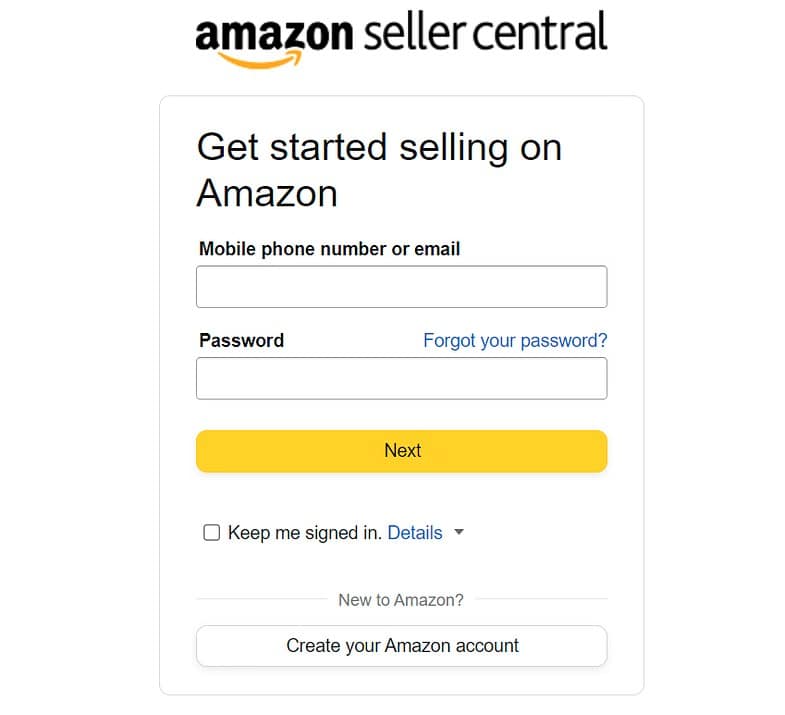
Allow sellers and buyers to create accounts and manage their profiles. Sellers should be able to provide necessary information, such as contact details, product descriptions, and shipping policies. Don’t forget to simplify this process to ease onboarding of sellers and encourage more guest visitors to convert into buyers.
Product Listing and Management
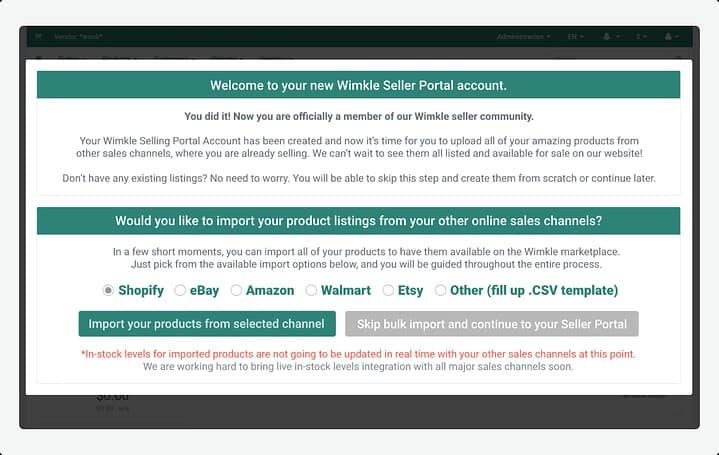
Enable vendors to easily list and manage their goods or services. This includes features like adding product descriptions, images, pricing, inventory management, and the ability to edit or deactivate listings.
Advanced Search and Product Discovery
Product discovery directly affects conversions and customer retention. Ecommerce platforms with large catalogs typically implement advanced filtering systems, personalized recommendations, autocomplete suggestions, and AI-powered search experiences to simplify navigation.
Many growing marketplaces also support semantic search, typo tolerance, image search, and dynamic category navigation to improve search relevance and help customers find products faster.
Large eCommerce catalogs often rely on technologies like Elasticsearch or OpenSearch to support fast filtering, semantic search, autocomplete, and real-time product discovery experiences.
Read more:
- Best eCommerce Search Engines in 2026 for Stores and Marketplaces
- How to Improve eCommerce Product Discovery in 2026
Order and Payment Processing
Provide a streamlined process for buyers to add products to their cart, proceed to checkout, and make payments securely. To boost conversions, add product tours that walk new vendors through listing and managing their first products—these guided walkthroughs can significantly reduce setup friction and improve onboarding success. The platform should support various payment gateways and offer secure transaction processing.

Some global marketplaces integrate cryptocurrency and stablecoin payments to simplify cross-border transactions and reduce payment processing costs.
Commission and Fee Management
Implement a commission or fee structure to charge sellers for each transaction. The platform should calculate and track these fees automatically, providing transparent reporting and payment settlement.
Messaging and Communication
Enable direct communication between buyers and sellers through a messaging system. This allows them to ask questions, negotiate terms, and resolve any issues or concerns.
Seller Analytics and Reports
Offer comprehensive analytics and reporting tools for sellers to track their sales, performance, and customer behavior. This data helps sellers make informed business decisions and optimize their offerings.
AI Features
Artificial intelligence is becoming a core part of modern multi-vendor marketplaces. AI-powered tools help marketplace owners automate operations, improve product discovery, personalize shopping experiences, and optimize conversions.
AI adoption in eCommerce continues to grow across retail and marketplace businesses. Recent industry reports indicate that around 80% of retailers are already using or actively piloting generative AI technologies for personalization, merchandising, customer support, and operational automation. (Triple Whale AI Ecommerce Statistics)
Modern marketplaces increasingly use AI-driven search engines, recommendation systems, AI-generated product descriptions, smart catalog enrichment, and predictive analytics. AI can also help vendors optimize pricing strategies, identify sales trends, and improve customer engagement.
Large marketplaces additionally implement AI-based fraud detection, automated moderation systems, and conversational AI assistants to improve customer support and marketplace trust.
AI-powered shopping assistants are also becoming increasingly important in eCommerce. Major technology companies and retailers, including Amazon, OpenAI, Google, Walmart, and Shopify, continue investing heavily in conversational commerce, AI-driven recommendations, and agentic shopping experiences. (MarketWatch)
Mobile-Friendly Design

Ensure that the marketplace platform is responsive and mobile-friendly, allowing users to access and use the platform seamlessly on various devices.
Social commerce and omnichannel retail continue to influence how customers discover and purchase products online. Marketplace businesses increasingly connect their platforms with TikTok Shop, Instagram Shopping, Facebook Marketplace, and live commerce channels to expand visibility and simplify multi-channel selling.
Inventory synchronization across websites, marketplaces, social platforms, and mobile apps also helps vendors manage operations more efficiently.
Dispute Resolution
Provide customer support channels to address inquiries, issues, or disputes that may arise between buyers and sellers. This can include email support, live chat, or a dedicated support ticketing system.
Social Sharing and Integration
Enable social sharing features to allow users to share products or services on social media platforms, increasing visibility and reach. Integration with social media accounts and other marketing tools can also be beneficial.
Customization and Branding
Offer customization options to allow marketplace owners to align the platform with their branding and design preferences. This includes customizable themes, colors, logos, and other visual elements.
These are some essential features for a multiseller marketplace platform. The specific features needed may vary depending on the industry, target audience, and unique requirements of your marketplace.
Software Solutions for Multi-vendor marketplace development
As we have already mentioned, there are several multi-vendor marketplace software solutions on the market. Here are some popular options:
Adobe Commerce (former Magento)

Adobe Commerce is a robust and scalable eCommerce system that offers a multi-vendor marketplace extension for marketplaces. It provides features like vendor registration, product listing, order processing, commission management, and more.
WooCommerce

WooCommerce is a popular WordPress plugin that can be extended to create a multi-vendor marketplace using plugins like “WooCommerce Product Vendors” or “Dokan.” It offers features such as vendor registration, inventory management, order processing, commission tracking, and more.
Shopify

Shopify is a widely-used hosted eCommerce software that offers multi-vendor functionality through apps like “Multi Vendor Marketplace” or “Webkul Marketplace.” These apps allow sellers to create profiles, list products, manage inventory, process orders, and handle payments.
OpenCart

OpenCart is an open-source eCommerce platform that can be extended with modules like “MultiMerch” or “Webkul Multi-Vendor Marketplace” to create a multi-vendor marketplace. It offers features such as vendor registration, product listing, order management, commission tracking, and more.
Yo!Kart

Yo!Kart is a dedicated multi-vendor marketplace solution that offers a range of features for building and managing a marketplace. It includes features like vendor registration, product management, order processing, commission tracking, vendor analytics, and more.
Sharetribe

Sharetribe is a platform specifically designed for creating peer-to-peer marketplaces. It offers features like vendor registration, product listing, order management, commission tracking, and a user-friendly interface for both buyers and sellers.
CS-Cart Multi-Vendor

CS-Cart is a comprehensive eCommerce solution that includes built-in multi-vendor functionality. It provides features like vendor registration, inventory management, seller analytics, order processing, commission tracking, and a user-friendly vendor dashboard.
Unlike plugin-based eCommerce solutions that depend heavily on third-party extensions, CS-Cart Multi-Vendor includes core marketplace functionality out of the box. This approach simplifies long-term scaling, reduces compatibility issues, and gives marketplace owners more control over customization and infrastructure.
The platform also supports multi-storefront architecture, API-first integrations, headless commerce implementations, and custom marketplace development for businesses planning to grow beyond the MVP stage.
Compare Multi-Vendor Marketplace Platforms
Different marketplace platforms are designed for different business sizes, scalability requirements, and customization needs. The table below compares some of the most popular multi-vendor marketplace solutions available today.
| Platform | Best For | Flexibility | Scaling |
|---|---|---|---|
| CS-Cart Multi-Vendor | SMB & Enterprise marketplaces | High | High |
| Shopify + Apps | Small marketplaces | Medium | Medium |
| WooCommerce | WordPress-based stores | Medium | Medium |
| Adobe Commerce | Enterprise eCommerce | High | High |
| Sharetribe | Marketplace MVPs | Low | Medium |
| Yo!Kart | Small & mid-size marketplaces | Medium | Medium |
Each platform has its own set of features, pricing, and customization options, so it’s important to evaluate your specific requirements before choosing the right solution for your marketplace.
Read more: Best Marketplace Platform: Top Marketplace Software Compared
Revenue Structure of Multi-Vendor eCommerce Marketplace Owners
In a multi-vendor, the marketplace owner acts as a facilitator or intermediary between the sellers and buyers. The marketplace owner provides the platform, infrastructure, and tools for sellers to list and manage their products, while also offering a seamless shopping experience for buyers.
The owner typically earns revenue through various revenue streams, such as:
- Commission Fees: The marketplace founder charges a commission fee or a percentage of each transaction made on the platform. This fee is usually based on the total order value or the product price. The commission fee can vary depending on the product (service) category, seller performance, or other factors.
- Subscription Fees: The owner may offer different subscription plans for sellers, allowing them to access additional features or benefits. Sellers pay a monthly or annual subscription fee to access these premium services.
- Listing Fees: The marketplace owner may charge sellers a fee for listing on the platform. This fee can be a one-time fee or a recurring fee for each listing.
- Advertising and Promotional Fees: The multi-vendor owner may offer advertising or promotional opportunities for sellers to increase their visibility on the platform. Sellers can pay a fee to feature their products in prominent positions or run targeted advertising campaigns.
- Transaction Fees: The owner may charge a flat fee or a percentage of the transaction value for each successful transaction made on the platform. This fee covers the cost of payment processing and transaction management.
- Additional Services: The marketplace owner may offer additional services to sellers, such as logistics, warehousing, or fulfillment. These services can be charged separately, either as a one-time fee or on a recurring basis.
The revenue structure varies depending on the specific business model, industry, and target market. Marketplace owners should carefully evaluate their pricing structure and monetization strategy to balance profitability with value for both sellers and buyers.
Marketplace Monetization Models
Successful marketplace businesses rarely rely on a single monetization model. Alongside transaction commissions, many platforms generate additional revenue through promoted listings, sponsored products, premium vendor subscriptions, advertising placements, fulfillment services, and financial tools for sellers.
B2B eCommerce ecosystems may also monetize API access, advanced analytics, supplier automation tools, and branded storefronts for enterprise vendors. A diversified revenue structure helps marketplaces improve profitability and scale more sustainably.
Different monetization models work better for different marketplace types. Service marketplaces often rely on transaction fees, while B2B ecosystems may generate more revenue through subscriptions, supplier tools, and premium integrations.
Read more: Marketplace Monetization: How to Monetize Your Marketplace and Boost Revenue
Challenges of building the successful multi-seller marketplace

Building a successful multi-seller marketplace can be a complex and challenging endeavor. Be aware of some common challenges:
Attracting Sellers
One of the biggest challenges is attracting a sufficient number of quality sellers to the marketplace. Sellers may hesitate to join a new marketplace with limited visibility and customer base. Building trust and offering incentives can help overcome this challenge.
Ensuring Product Quality and Consistency
Maintaining product quality and consistency across multiple sellers can be a challenge. Implementing strict seller onboarding processes, quality control measures, and customer feedback systems can help address this challenge.
Managing Seller Relationships
Managing relationships with multiple sellers can be time-consuming and requires effective communication and support. Providing clear guidelines, offering seller support, and addressing seller concerns promptly can help build strong relationships.
Balancing Supply and Demand
Balancing the supply of products or services with customer demand is crucial for a successful marketplace. Ensuring that there are enough sellers and products to meet customer demand, especially during peak periods, can be challenging.
Read more: Marketplace Network Effects: Building Self-Growing Platforms
Ensuring Competitive Pricing
Maintaining competitive pricing across multiple sellers can be challenging. Implementing pricing guidelines, monitoring market trends, and offering tools for sellers to optimize their pricing can help address this challenge.
Managing Logistics and Fulfillment
Logistics and fulfillment can be complex when multiple sellers are involved. Implementing efficient shipping and fulfillment processes, providing tracking information, and ensuring timely delivery can help provide a positive customer experience.
Ensuring a Seamless User Experience
Providing a seamless and user-friendly experience for both sellers and buyers is essential. Investing in a well-designed and intuitive platform, offering comprehensive search and filtering options, and providing responsive customer care can help enhance the user experience.
Overcoming these challenges requires careful planning, effective execution, and continuous improvement. It’s important for marketplace owners to understand their target market, differentiate their platform, and provide value to both sellers and buyers to build a successful multi-seller marketplace.
High Load
A high-load online marketplace needs to handle a large volume of traffic, transactions, and user interactions without experiencing performance issues or downtime. Consider the following features with your hosting provider:
- Scalability: The platform should be built with scalability in mind, allowing it to handle increasing traffic and user demands. This can be achieved through technologies like cloud hosting, load balancing, and horizontal scaling. Large marketplaces often use microservices architecture, container orchestration, API gateways, and asynchronous queues to distribute workloads and prevent bottlenecks during traffic spikes. Container orchestration technologies like Kubernetes are often used to automate infrastructure scaling, workload balancing, and deployment management for high-load marketplace environments.
- Performance Optimization: The marketplace should be optimized for fast page load and efficient database queries. Techniques like caching, content delivery networks (CDNs), and database indexing can help improve performance.
- Robust Infrastructure: A high-load marketplace requires a robust infrastructure with redundancy and failover mechanisms to ensure high availability. This may involve multiple servers, load balancers, and backup systems.
- Database Management: Efficient database management is crucial for handling high loads. Implementing techniques like database sharding, read replicas, caching layers, and distributed storage can help distribute the load and improve database performance.
- Caching and Content Delivery: Utilizing caching mechanisms and content delivery networks (CDNs) can help reduce the load on the server and improve the delivery of static content like images and CSS files.
- Monitoring and Analytics: Implementing monitoring tools and analytics systems can help track the performance of the marketplace, identify bottlenecks, and optimize the platform for better performance.
- Security: A high-load marketplace should have robust security measures in place to protect user data, prevent fraud, and ensure secure transactions. This may involve implementing SSL encryption, secure payment gateways, and regular security audits.
It’s crucial to consult with experienced developers and infrastructure specialists to ensure that the chosen platform and architecture can handle the expected load and provide a seamless user experience even during peak times, which is essential for growing your multi-vendor marketplace.
Read more: How to Scale a Marketplace Business
API-First Marketplace Scalability
API-first marketplace platforms simplify integrations with ERP, CRM, payment gateways, shipping providers, PIM systems, and mobile applications. This architecture also allows businesses to scale individual services independently without rebuilding the entire marketplace.
Microservices architecture becomes especially important for marketplaces with multiple storefronts, large product catalogs, independent seller operations, or complex integrations with ERP and fulfillment systems.
How Much Does It Cost To Build a Multi-Vendor Marketplace?
The cost of building a multi-vendor marketplace can vary significantly depending on various factors such as the complexity of the platform, the features and functionalities required, the technology stack chosen, the level of customization, and the development approach (in-house development or outsourcing).
Here are some cost components to consider when estimating the cost of building a multi-vendor marketplace:
- Platform Development: The development of the marketplace platform itself is a significant cost component. This includes front-end and back-end development, database design, user interface (UI) and user experience (UX) design, and integration of various features and functionalities. The cost can vary depending on the complexity of the platform and the technology stack chosen.
- Customization and Branding: If you require customizations and branding specific to your marketplace, such as unique design elements, custom features, or integration with third-party systems, it may add to the development cost.
- Mobile App Development: If you plan to have a mobile application for your marketplace, the cost of developing native or hybrid mobile apps for iOS and Android platforms should be considered separately.
- Payment Gateway Integration: Integrating payment gateways to facilitate secure transactions on your marketplace may involve additional costs, including setup fees, transaction fees, and ongoing maintenance fees.
- Hosting and Infrastructure: The cost of hosting and infrastructure depends on the scale and expected traffic of your marketplace. It includes the cost of servers, cloud hosting services, content delivery networks (CDNs), and security measures.
- Third-Party Integrations: If you plan to integrate third-party services, such as shipping providers, analytics tools, or marketing automation platforms, there may be additional costs associated with integration and ongoing usage.
- Testing and Quality Assurance: It is essential to allocate a budget for thorough testing and quality assurance to ensure the functionality, performance, and security of your marketplace.
- Maintenance and Support: Ongoing maintenance, bug fixes, feature enhancements, and technical support should be considered as part of the overall cost. This can be done in-house or outsourced to a development team.
Read more: What’s the Cost of Building a Marketplace Website?
Our Multi-Vendor Marketplace Examples
SeeWhatHappens

- Segment: B2C
- Category: Glasses, beauty and personal care
- Type: marketplace from scratch
- Main business goal: make design changes and integrate systems for better user experience
Key functions:
This optical marketplace offers an opportunity to find the nearest optician, enter a prescription, book an appointment with a local optician, and even virtually try on glasses
Project goals:
- Integrate a service for glasses virtual try-on
- Introduce a feature to find the nearest optician
- Add an opportunity to book an appointment with a local optician
- Develop a functionality to enter a prescription
- Configure and release Stripe Connect
Gemsquar

- Segment: B2C
- Category: jewelry, Beauty and personal care
- Type: marketplace
- Main business goal: make design changes to better serve customers
Key features:
Jewelry marketplace with unique design, the size guide, calendar, and tags block.
Project goals:
- Create a jewelry marketplace from scratch based on the standard license
- Redesign the store to add Calendar, Size guide and other options to better serve customers
Read more: How to Sell Jewelry Online in eCommerce Stores and Marketplaces
Unixmo
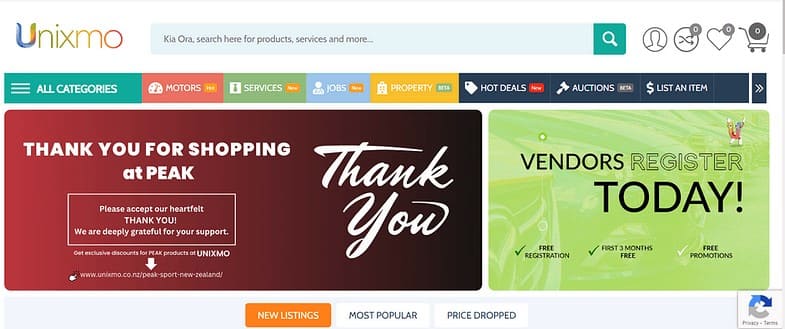
- Segment: B2C, B2B
- Category: car, car parts
- Type: marketplace
- Main business goal: introduce affiliate program to offer discounts for members
Key functions:
An automotive marketplace from Australia with an affiliate program and ability to sustain high loads
Project goals:
- Master a new market (target audience – residents of neighboring Australia, individuals and legal entities), focus on increasing the number of suppliers of goods and services.
- Promote the partnership program between UNIXMO and the New Zealand Automotive Repair Industry Society “Capricorn” (a 50-year-old association helping SMEs in the automotive industry grow their businesses, 11,000 members, 4,500 companies, over 50 support programs for business owners).
- Implement a system of automatic payments, including the return of goods.
- Get an optimal hosting solution to improve marketplace performance.
These are just a few examples of the customization services offered by CS-Cart developers. We have a team of experienced developers who can tailor the multi-vendor marketplace platform to your specific needs and requirements.
Final Thoughts
Building a successful multi-vendor marketplace involves much more than launching a website with multiple sellers. Long-term growth depends on scalable infrastructure, efficient vendor onboarding, secure payment systems, marketplace automation, mobile-first experiences, and sustainable monetization strategies.
Businesses that start with flexible marketplace software and focus on gradual ecosystem growth are typically better positioned to scale internationally, automate operations, and adapt to changing eCommerce trends.
Whether you plan to launch a niche marketplace MVP or build a large enterprise commerce ecosystem, the choice of marketplace architecture and software platform will significantly influence future scalability and operational efficiency.
For businesses seeking a scalable, fully-featured solution, our enterprise eCommerce solution provides built-in multi-vendor functionality, API-first integrations, and expert support — book a strategy call to get a tailored roadmap for your project.
Frequently Asked Questions
How long does it take to build a multi-vendor marketplace?
The timeline depends on the complexity of the project. A marketplace MVP built on ready-made marketplace software can often be launched within several weeks, while enterprise marketplaces with custom integrations and mobile apps may require several months of development.
What is the best software to create a multi-vendor marketplace?
The best marketplace software depends on your business model, scalability requirements, customization needs, and budget. Popular solutions include CS-Cart Multi-Vendor, Sharetribe, Adobe Commerce, Shopify Marketplace apps, and Yo!Kart.
Can I create a multi-vendor marketplace without coding?
Yes. Many modern marketplace platforms provide built-in vendor management, payment processing, shipping systems, and marketplace automation tools that allow businesses to launch without extensive custom development.
How do multi-vendor marketplaces make money?
Marketplace owners typically monetize their platforms through commissions, subscription plans, listing fees, advertising placements, transaction fees, and additional services like fulfillment or premium seller tools.
What features should a multi-vendor marketplace have?
Core marketplace features usually include vendor onboarding, product management, split payments, order management, shipping configuration, reviews, analytics, mobile optimization, and marketplace security tools.

eCommerce expert with 10+ years of experience in marketplace management and consumer behavior. Gayane tracks the latest industry trends to provide businesses with analytical, actionable insights.