In recent years, fulfillment companies have become a vital component of eCommerce, providing sellers with comprehensive logistics solutions for efficient marketplace operations. In this article, we review the 10 best fulfillment services of 2026, highlighting their capabilities, advantages, and the diverse logistics options they offer to enhance order processing, storage, and delivery efficiency.
Today’s fulfillment companies combine warehouse management systems, inventory management automation, and shipping carrier integration to streamline order fulfillment operations for online stores and marketplaces. Many order fulfillment companies now provide end-to-end eCommerce logistics services, including warehousing, pick and pack operations, shipping management, and returns processing.
If you’re looking for the best fulfillment companies to scale your eCommerce operations, this guide offers a detailed overview of the top providers in 2026.
As your eCommerce business grows, choosing the right fulfillment partner is only part of the scaling process. You also need an eCommerce platform that can support complex order workflows, vendor operations, and integrations with logistics providers as your operations expand. CS-Cart helps businesses build scalable online stores and multi-vendor marketplaces with flexible order management, vendor control tools, and integration capabilities for expanding eCommerce ecosystems.
– Modern eCommerce fulfillment providers increasingly rely on AI forecasting, warehouse automation, and omnichannel logistics infrastructure.
– Choosing a fulfillment provider requires evaluating integrations, fulfillment models, delivery coverage, and inventory management capabilities.
What is Fulfillment?
Fulfillment is a set of services that includes warehousing, packaging, product labeling, and delivery of customer orders. There are two main models of operation: FBO (Fulfillment by Operator — delivery from the marketplace’s warehouse) and FBM (Fulfillment by Merchant— delivery from the seller’s warehouse). In the first fulfillment model, the marketplace operator oversees all order processing from a centralized fulfillment warehouse, ensuring timely delivery and consistent service. In the second model, the seller independently manages certain aspects of the fulfillment process, allowing for greater flexibility and operational control.
Key Global Fulfillment Statistics for 2026
- According to ResearchAndMarkets, the global eCommerce logistics market exceeded $540 billion in 2024 and is projected to continue double-digit growth through 2030, driven by rising online retail demand, cross-border commerce, and last-mile delivery expansion. (ResearchAndMarkets).
- The global eCommerce fulfillment services market is estimated to reach $141.35 billion in 2025 and is projected to grow at a CAGR of over 14% through 2034. (Precedence Research Fulfillment Market Report).
- Global eCommerce sales are forecasted to reach $7.39 trillion in 2025, up from $6.15 trillion in 2023, highlighting the massive scale of online retail driving fulfillment demand (Waredock).
- Cross-border e-Commerce is growing at an estimated 15–20%, further boosting demand for international fulfillment centers and complex logistics solutions (Omniful).
- Approximately 60% of online retailers outsource at least part of their fulfillment operations, highlighting the expanding role of third-party logistics providers (3PLs) in warehousing, shipping, returns management, and order processing for eCommerce businesses (Capital One Shopping Fulfillment Statistics).
- Large-scale mergers and acquisitions continue reshaping the fulfillment industry as major logistics providers expand their delivery networks, warehouse infrastructure, and automation capabilities (Parcel and Postal Technologies International).
These trends highlight the crucial importance of efficient, technology-enabled fulfillment networks in meeting the demands of a rapidly growing global online shopper base.
eCommerce Fulfillment Trends in 2026
AI-Powered Inventory Forecasting
Leading fulfillment providers increasingly use AI and predictive analytics to forecast inventory demand, optimize warehouse allocation, and reduce stockouts during peak sales periods.
Read more: AI in eCommerce: Use Cases, Examples & Trends for 2026
Micro-Fulfillment Centers
To support same-day and next-day delivery expectations, many fulfillment providers are expanding micro-fulfillment networks closer to urban areas and high-demand regions.
Cross-Border Fulfillment Growth
Cross-border eCommerce continues to grow rapidly in 2026, increasing demand for localized fulfillment centers, regional returns processing, customs compliance support, and multi-currency shipping operations. Reliable eCommerce fulfillment for cross-border sales allows marketplaces to reduce shipping delays and improve customs, delivery, and regional logistics management. A strategically located eCommerce fulfillment center can significantly reduce shipping times and improve regional delivery performance for online marketplaces.
Sustainability and Green Logistics
Many fulfillment companies now offer eco-friendly packaging, carbon-neutral shipping programs, and sustainable shipping practices to reduce environmental impact
Marketplace and Omnichannel Fulfillment
Many fulfillment providers now support omnichannel operations, helping merchants synchronize inventory across marketplaces, online stores, social commerce channels, and retail locations.
Why Do Marketplaces Need Fulfillment?
Fulfillment is a strategic asset for online marketplaces, and a well-planned fulfillment strategy tailored to your business needs can reduce operational complexity and accelerate time to market. It helps automate order processing, boost logistics efficiency, and shorten delivery times. Efficient fulfillment workflows are closely connected with marketplace order management, inventory synchronization, and multi-vendor logistics coordination. For many marketplaces, partnering with a reliable shipping fulfillment company is the easiest way to reach this level of operational maturity.
By outsourcing logistics to professional fulfillment providers, marketplaces can avoid the high costs of building and managing their warehouse infrastructure.
These marketplace fulfillment solutions eliminate the need to invest in logistics infrastructure, offering a faster route to growth and supporting an international presence. Advanced eCommerce fulfillment solutions also help marketplaces automate shipping workflows, improve inventory visibility, and manage multi-vendor logistics operations more efficiently. Outsourcing fulfillment is especially beneficial for startups and SMBs that lack the capacity to manage warehousing and logistics in-house.
Fulfillment also supports business scalability. International shipping adds complexity to order fulfillment, which is why working with experienced providers is essential for global marketplaces.
This makes it crucial for marketplaces to partner with services that can manage a efficient and reliable order fulfillment process. As order volumes and product assortments grow, fulfillment partners make it easy to increase throughput without operational overload. Many fulfillment companies offer flexible inventory storage solutions tailored to your sales volume and product types.
An efficient fulfillment setup directly contributes to operational efficiency and long-term marketplace growth.
For vendors, fulfillment minimizes the time spent on logistics, freeing up resources to focus on marketing and sales. Providers that support demandware shipping fulfillment can further streamline order routing across multiple sales channels. Custom packaging helps strengthen brand identity and enhance the unboxing experience for customers.
Fulfillment directly impacts customer satisfaction, as delays, stockouts, or incorrect shipments can negatively affect brand loyalty. Strategically located warehouses allow marketplaces to offer faster shipping, reduce shipping costs, and meet regional delivery expectations.
Fulfillment companies often operate distributed warehouse networks to ensure faster delivery and reduce last-mile delays. Reliable eCommerce logistics providers help marketplaces maintain delivery speed and service quality during peak seasons, especially when using multi-carrier shipping strategies to balance shipping costs and regional delivery coverage.
Fulfillment Challenges for Online Marketplaces
As marketplaces grow, fulfillment becomes significantly more complex than simply storing and shipping products. Orders may come from multiple vendors, warehouses, regions, and sales channels at the same time, making logistics coordination one of the key operational challenges for scaling eCommerce businesses.
Growing marketplaces often face challenges such as:
- synchronizing inventory across multiple vendors and fulfillment centers;
- managing returns and reverse logistics efficiently;
- coordinating split shipments and multi-vendor orders;
- reducing delivery delays during peak sales periods;
- maintaining fast shipping without dramatically increasing fulfillment costs;
- handling cross-border shipping, customs, and international delivery expectations;
- integrating fulfillment providers with marketplace platforms and inventory systems.
Customer expectations are also evolving rapidly. Same-day delivery, real-time shipment tracking, flexible returns, and accurate delivery estimates are becoming standard requirements rather than competitive advantages.
This is why many growing marketplaces rely on fulfillment providers capable of supporting complex multi-vendor logistics and high order volumes.
Key Fulfillment KPIs for Online Marketplaces
Monitoring fulfillment KPIs helps marketplaces evaluate logistics performance, identify operational bottlenecks, and improve customer satisfaction.
- Order accuracy rate
- Average delivery time
- Fulfillment cost per order
- Return rate
- Inventory turnover
- Shipping SLA compliance
- Warehouse processing speed
How to Choose a Fulfillment Provider?
When choosing a fulfillment service for your marketplace, integration and functionality are key. The right fulfillment partner should not only store and ship your products but also offer tools for real-time inventory management, order management, return handling, and performance analytics. Many fulfillment service providers offer specialized tools for managing inventory, tracking shipments, and handling returns efficiently.
Some providers specialize in high-volume enterprise clients, while others focus on startups and small brands—offering flexible pricing models with low upfront costs. Evaluate each provider’s network, platform compatibility, and support for multichannel operations. Each marketplace should evaluate whether the fulfillment partner uses an in-house or outsourced delivery service or works with external shipping carriers, as this can affect delivery speed and reliability. Choosing among the best fulfillment companies requires analyzing your scale, delivery needs, and system integrations.
Core Fulfillment Services for Marketplaces
- Warehousing in strategic global locations (e.g., U.S., Europe, Asia-Pacific) for faster delivery to end customers
- Order picking and branded packaging based on marketplace requirements
- End-to-end fulfillment shipping, from warehouse pick-up to last-mile delivery
- Returns management, including inspection and restocking of returned products
- Product labeling and barcoding to automate inventory handling
- Climate-controlled storage for perishable or sensitive goods
- Automated pick and pack workflows for faster and more accurate order processing
Software Integration Capabilities
- API integration with popular eCommerce platforms (e.g., CS-Cart, Magento, WooCommerce) and marketplaces (e.g., Amazon, eBay) along with real-time shipment visibility through multi-carrier tracking APIs
- Shipping carrier integration enables marketplaces to automatically compare rates, generate shipping labels, and synchronize tracking information across carriers like FedEx, UPS, DHL, and regional logistics providers , which is essential for effective shipping management on eCommerce marketplaces.
- Centralized dashboard to manage pricing, orders, and inventory across channels
- Real-time inventory updates, low-stock alerts and backorder notifications
- Warehouse management systems help synchronize inventory levels across multiple fulfillment centers and sales channels in real time.
- Automatic order status syncing with customer-facing systems
- Integration with analytics and performance monitoring tools
Key Fulfillment Models Supported
- FBO (Fulfillment by Operator) – the fulfillment provider handles all logistics from its own warehouse
- FBM (Fulfillment by Merchant) – the seller stores products and ships directly with fulfillment support
- Hybrid/On-Demand Models – combining multiple delivery and storage options across regions
| Model | Best For | Advantages | Limitations |
|---|---|---|---|
| FBO (Fulfillment by Operator) | Large marketplaces and enterprise operations | Faster shipping, centralized inventory management, simplified logistics | Less seller flexibility and higher storage dependency |
| FBM (Fulfillment by Merchant) | SMB sellers and niche stores | Lower warehousing costs, greater operational control | Harder to scale fulfillment operations |
| Hybrid Fulfillment | Growing marketplaces with multiple sales channels | Flexible logistics strategy and regional fulfillment optimization | More complex inventory and order synchronization |
Each eCommerce fulfillment provider in our list offers unique strengths depending on your marketplace’s scale, delivery expectations, and need for multiple locations.
What Defines a Modern Fulfillment Company in 2026?
Fulfillment companies are no longer just warehouse operators. They combine warehouse management systems, real-time inventory synchronization, pick and pack automation, shipping carrier integration, and last-mile delivery optimization to help eCommerce businesses process orders faster and reduce logistics errors.
For marketplaces, these capabilities are especially important because orders may come from multiple vendors, product catalogs, regions, and sales channels. A strong fulfillment partner should help synchronize inventory, automate order routing, generate shipping labels, track deliveries, and support returns without adding operational complexity.
Top eCommerce Fulfillment Companies in 2026
1. ShipBob
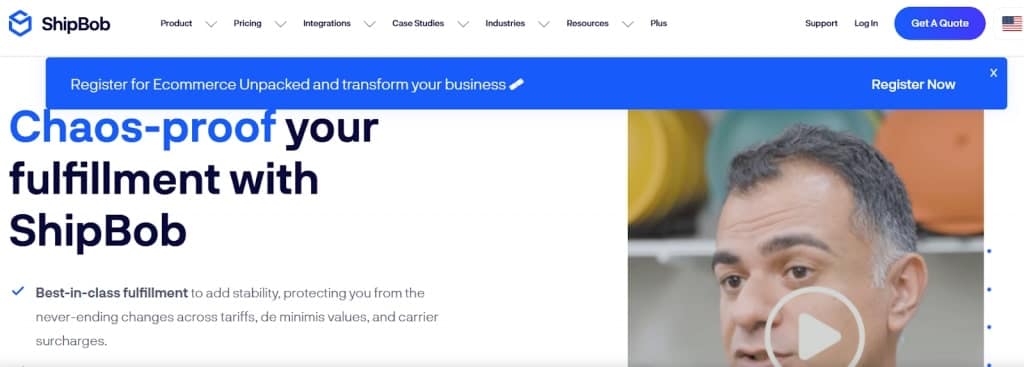
ShipBob is a tech-enabled 3PL with an extensive network of warehouses in strategic locations across North America, Europe, and Australia.
- Features: Branded packaging, inventory forecasting, 2-day or same-day delivery.
- CS-Cart Integration: API-based connections are possible via middleware solutions like Zapier or through custom development.
- Best For: DTC brands expanding internationally with a focus on speed.
2. Flexport Fulfillment (formerly Deliverr)
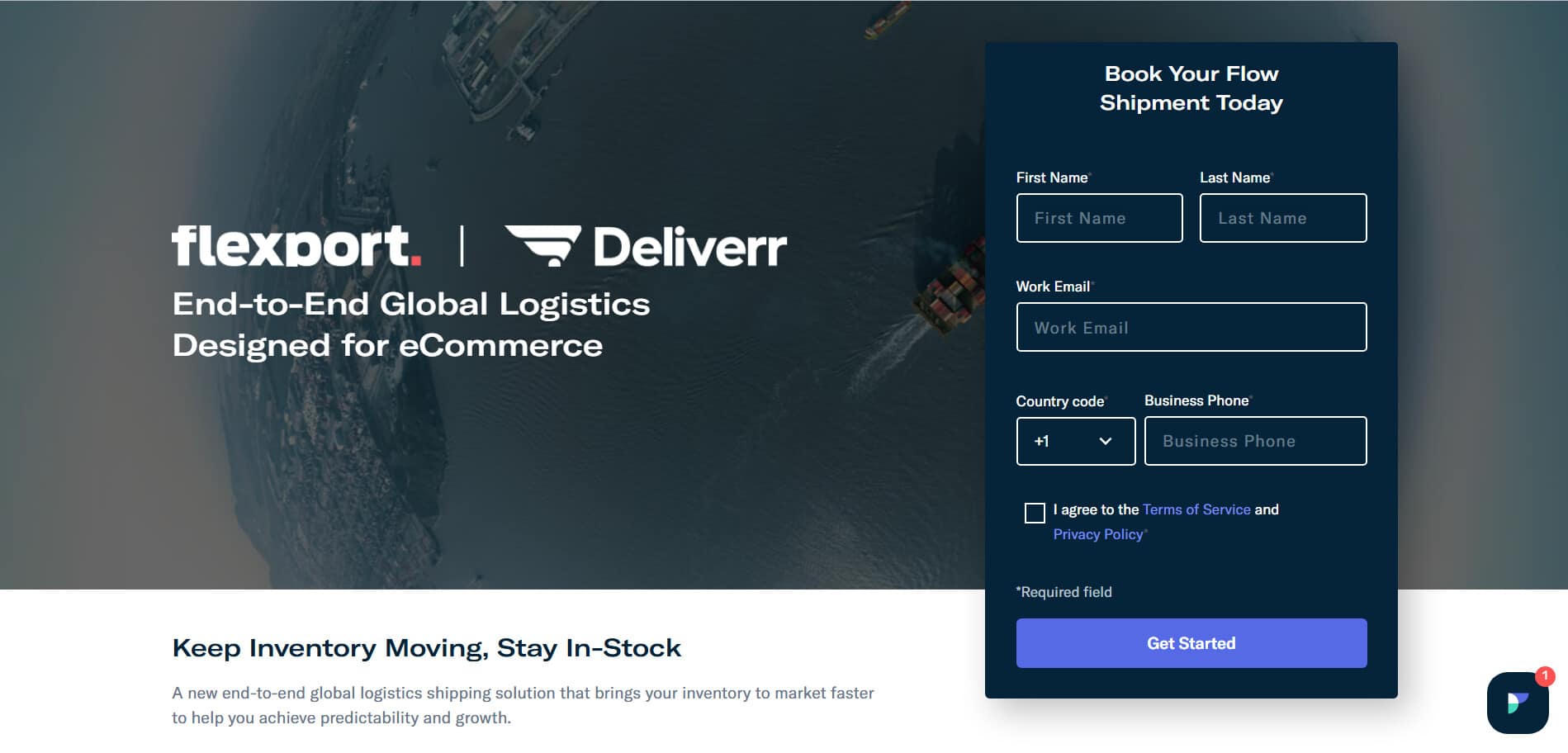
Specializes in 1–2 day nationwide US delivery, integrated into Flexport’s global network.
- Features: Predictive analytics, multi-channel fulfillment, and cost-effective operations make Flexport ideal for sellers focused on minimizing fulfillment costs.
- CS-Cart Integration: can be connected through Flexport API or third-party platforms.
- Best For: Sellers prioritizing speed and cost-efficiency in the US.
3. ShipMonk
Global fulfillment with warehouses in the US, EU, Canada, and Mexico.
- Features: Over 100 integrations, supports crowdfunding and subscription models.
- CS-Cart Integration: possible via middleware or custom API development.
- Best For: eCommerce brands scaling internationally, especially subscription models.
4. Fulfillment by Amazon (FBA)
Fulfillment by Amazon (FBA) for CS-Cart involves utilizing Amazon’s warehouses and fulfillment services to ship customer orders through Amazon Multi-Channel Fulfillment, typically via third-party or custom integrations.
The CS-Cart Amazon FBM add-on is a popular official extension that connects CS-Cart to Amazon for sellers who fulfill orders themselves (FBM), enabling order and inventory synchronization but not Amazon fulfillment.
Sellers wanting full FBA integration often rely on middleware or custom API solutions to automate order routing from CS-Cart to Amazon fulfillment centers.
- Features: Inventory handling, order processing, customer service, returns.
- CS-Cart Integration: ✅ Supported—via CS-Cart Amazon FBM add-on (Webkul) for managing merchant-fulfilled orders.
- Best For: Sellers leveraging Amazon’s marketplace and logistics.
5. Red Stag Fulfillment

US-based 3PL recognized for its high accuracy and same-day shipping capabilities.
- Features: 100% order accuracy guarantee, free trial.
- CS-Cart Integration: ✅ Direct integration available.
- Best For: Businesses that require high-speed, accurate US fulfillment.
6. FedEx Fulfillment
Backed by FedEx’s global network with full end-to-end fulfillment logistics and supply chain services.
- Features: Global logistics, reverse logistics, returns, multi-channel.
- CS-Cart Integration: ⚠️ Shipping modules available with partial fulfillment workflows.
- Best For: SMBs needing global reach with a trusted logistics provider.
7. SHIPHYPE
3PL tailored for fast and automated fulfillment.
- Features: Transparent pricing, API/webhook-based automation.
- CS-Cart Integration: ✅ Direct integration with CS-Cart via API/webhooks.
- Best For: CS-Cart stores seeking easy automation and scalability.
8. ShipHero
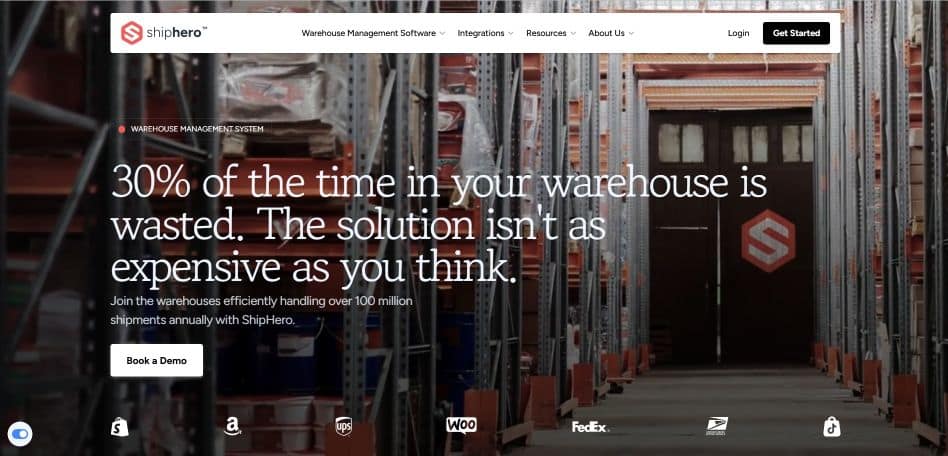
Tech-enabled fulfillment company and warehouse management platform with fulfillment centers across the US and Canada.
- Features: Advanced warehouse management system (WMS), real-time inventory tracking, order automation, batch picking, shipping carrier integrations, and omnichannel fulfillment support.
- CS-Cart Integration: ✅ API-based integration possible via middleware or custom development.
- Best For: Growing eCommerce brands and marketplaces that need scalable warehouse operations and advanced inventory management.
9. eFulfillment Service (EFS)
eFulfillment Service is known as a budget-friendly 3PL focused on SMBs.
- Features: Web-based tools, free integration support.
- CS-Cart Integration: ✅ Direct integration available.
- Best For: SMBs and startups needing cost-effective fulfillment and automation.
10. AMZ Prep
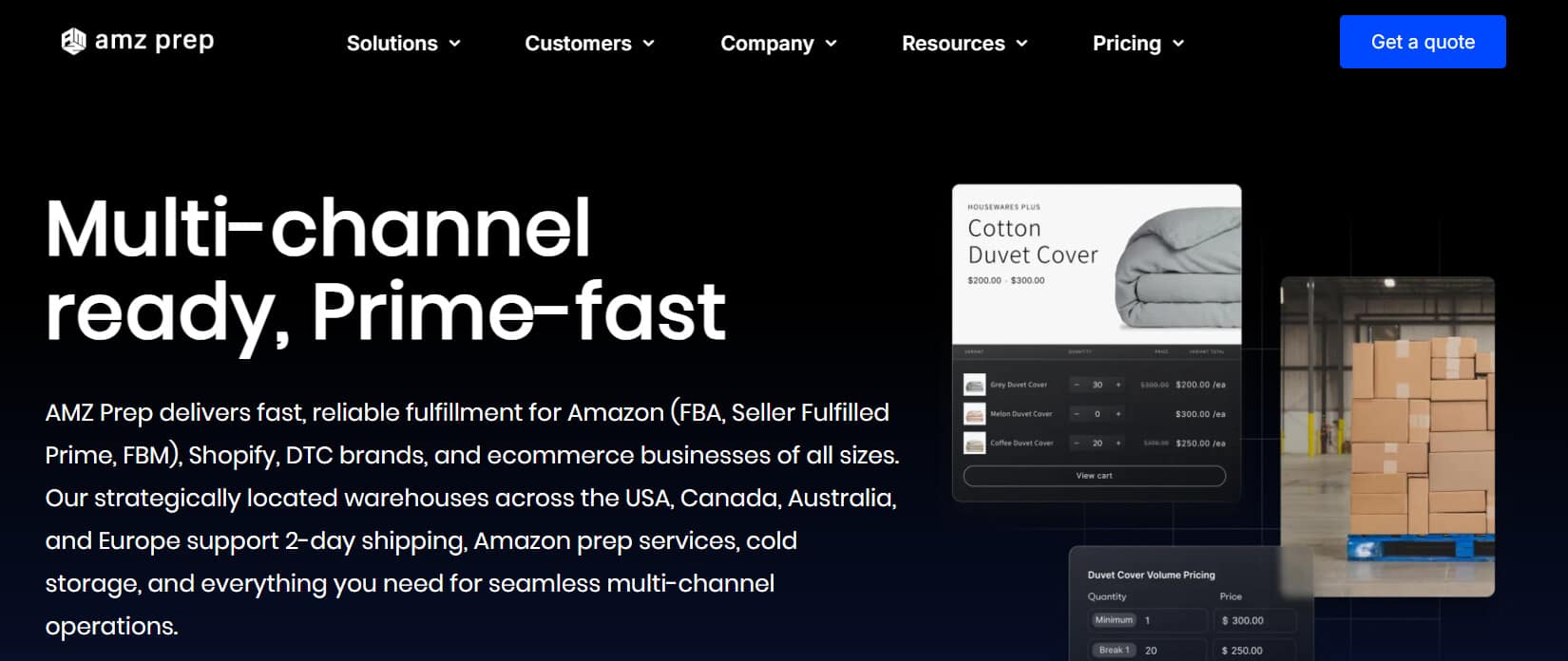
AMZ Prep is a tech-enabled 3PL founded in 2016 with an extensive fulfillment network of 50+ locations across North America (USA, Canada), Europe, and Australia.
- Features: FNSKU labeling, poly bagging and bubble wrapping, bundle creation and kitting, inspection and quality control, case forwarding with zero placement fees, temperature-controlled storage, Seller Central integration, 24-72 hour processing..
- CS-Cart Integration: ✅ API-based connections are possible via middleware solutions like Zapier or through custom development using their proprietary technology platform.
- Best For: Amazon FBA sellers looking for comprehensive prep services with fast processing times, DTC brands requiring multi-channel fulfillment (Shopify, TikTok, Walmart), and sellers expanding internationally with a focus on eliminating placement fees and storage optimization.
Summary Table
Here’s a side-by-side comparison of the top fulfillment companies and what makes them ideal for different business types.
| Provider | Regions Served | Key Features & Fulfillment Models | API/Middleware Integration Status | Best For / Notes |
|---|---|---|---|---|
| ShipBob | US, EU, AUS | Branded DTC fulfillment, fast delivery, omnichannel (DTC & B2B), subscription support, temperature-controlled warehousing, FBA prep. Supports FBM (seller ships inventory to ShipBob warehouse), and can support hybrid models. | Integrations via middleware or custom | DTC brands expanding internationally; strong WMS and lot tracking for consumables |
| Flexport (Deliverr) | US | 1–2 day delivery, predictive inventory placement, primarily FBM (seller sends inventory to Flexport warehouses). Supports Flexport API for integration. | ⚠️ Integration via Flexport API | US sellers prioritizing speed & cost efficiency; strong predictive fulfillment |
| ShipMonk | US, EU, Canada, Mexico | Subscription & crowdfunding support, omnichannel fulfillment, FBM model (inventory stored at ShipMonk warehouses). Advanced OMS and WMS with real-time visibility. | Middleware or API-based integrations | Global ecommerce scaling with subscriptions and complex workflows |
| Fulfillment by Amazon (FBA) | Global | FBO model: seller sends inventory to Amazon fulfillment centers; Amazon handles storage, packing, shipping, returns, and customer service. Also supports FBM (Fulfillment by Merchant) for seller-handled fulfillment. | ✅ Amazon FBM addon for CS-Cart and other platforms | Sellers using Amazon ecosystem; global reach and Prime shipping |
| Red Stag Fulfillment | US | High accuracy, same-day fulfillment, FBM model (inventory at Red Stag warehouses). Supports hybrid fulfillment models combining multiple 3PLs or in-house. | ✅ Direct API integration | US-based sellers needing accuracy-critical fulfillment; supports hybrid fulfillment |
| FedEx Fulfillment | Global | Trusted brand, full supply chain services, primarily the FBM model (inventory at FedEx warehouses). Partial integration via shipping modules. | ⚠️ Integrations via shipping modules | Global SMBs needing reliable logistics and fulfillment |
| SHIPHYPE | US, Global | Transparent, automated 3PL, full API integration with CS-Cart. Supports FBM and hybrid fulfillment models. | ✅ Full API integration | CS-Cart sellers needing fast 3PL setup and automation |
| ShipHero | US, Canada | Advanced WMS, real-time inventory tracking, batch picking, shipping automation, omnichannel fulfillment, and warehouse analytics. Supports FBM and hybrid fulfillment models. | ✅ API-based integrations via middleware or custom setup | Growing eCommerce brands and marketplaces needing scalable fulfillment and warehouse management |
| eFulfillment Service | US | Affordable, web-based platform, direct integration with CS-Cart. Supports FBM model. | ✅ Direct integration | Small businesses using CS-Cart seeking simple fulfillment |
| AMZ Prep | US, Canada, EU, AUS | FNSKU labeling, poly bagging, bubble wrapping, bundle creation/kitting, inspection & QC, case forwarding (zero placement fees), Seller Central integration, temp-controlled storage. Supports FBM and hybrid. | ✅ API-based via middleware (Zapier/custom API) | Amazon FBA sellers needing prep services, DTC brands requiring multi-channel fulfillment (Shopify, Walmart, TikTok), sellers expanding internationally efficiently |
Flexport Fulfillment – Best for US-focused marketplaces prioritizing delivery speed and logistics optimization.
ShipHero – Best for marketplaces requiring advanced warehouse management and inventory automation.
AMZ Prep – Best for Amazon sellers and businesses requiring FBA preparation services.
Conclusion: How to Choose a Fulfillment Provider?
Fulfillment companies have become indispensable partners for online marketplaces, enabling sellers to concentrate on business growth and expansion while minimizing logistics challenges. Best eCommerce fulfillment companies offer the technology, infrastructure, and scale needed to keep up with rising customer expectations.
As the demand for fulfillment services continues to rise, selecting a trusted and reliable partner has become critical for ensuring the long-term success and scalability of your eCommerce business. For marketplaces, delivering consistently high customer satisfaction is only possible with a reliable and scalable fulfillment solution. Partnering with a third party logistics company reduces the need for capital investment in warehouses and staff, while providing enterprise-level fulfillment capabilities.
Providers with strong last-mile delivery networks and advanced warehouse management systems are better equipped to support growing marketplaces and international ecommerce operations.
Choosing a fulfillment provider that can scale together with your eCommerce platform is becoming a critical long-term business decision.
⚡ What to Consider When Choosing a Fulfillment Provider:
✔ Compatibility with your marketplace’s operating model (FBO, FBM, hybrid)
✔ Integration with your sales channels (e.g., Amazon, eBay, Walmart, Etsy)
✔ Order and return processing speed
✔ Flexible pricing and storage conditions
💡 Remember: Choosing the wrong fulfillment partner can lead to delays, damaged goods, and higher return rates—hurting your brand and profits.
Ready to connect a fulfillment partner? Explore our list of top-rated fulfillment services and select the one that ensures fast, reliable, and scalable logistics for your marketplace. Our curated list of the best order fulfillment companies in 2026 helps you choose the right partner for your marketplace.
As your marketplace grows, your platform should also support flexible fulfillment workflows, vendor management, shipping automation, and third-party logistics integrations. CS-Cart helps businesses build scalable online marketplaces with customizable order management and integration capabilities for modern fulfillment operations.
FAQ
What is an eCommerce fulfillment company?
An eCommerce fulfillment company manages warehousing, order processing, shipping, inventory storage, and returns for online stores and marketplaces.
What is the difference between FBO and FBM fulfillment?
FBO means products are stored and shipped from the fulfillment provider’s warehouse, while FBM means sellers store and ship products themselves. Many marketplaces use hybrid fulfillment models that combine both approaches.
How do fulfillment companies help marketplaces?
Fulfillment providers help marketplaces automate logistics operations, reduce delivery times, improve inventory management, and scale order processing without building their own warehouse infrastructure.
What should businesses look for in a fulfillment provider?
Businesses should evaluate delivery coverage, warehouse locations, shipping speed, integration capabilities, fulfillment models, and inventory management tools.
Can CS-Cart integrate with fulfillment providers?
Yes. CS-Cart supports integrations with third-party logistics providers (3PLs), shipping carriers, warehouse management systems (WMS), and fulfillment services through APIs, middleware, and custom integrations.

eCommerce expert with 10+ years of experience in marketplace management and consumer behavior. Gayane tracks the latest industry trends to provide businesses with analytical, actionable insights.