According to Forrester and recent industry analyses, B2B digital commerce continues to expand rapidly, with online channels now accounting for more than 20–25% of total B2B transactions in leading markets and expected to grow further as procurement becomes increasingly digital and AI-driven.
This is no surprise. Modern B2B buyers expect procurement experiences similar to consumer eCommerce. They rely on B2B eCommerce Platforms that support account-based commerce, bulk ordering, and customer-specific catalogs instead of traditional manual supplier communication.
In this article, we analyze leading B2B eCommerce Platforms and Enterprise Digital Commerce Platforms, compare their capabilities, and explain how businesses can evaluate systems for scalability, integration, and long-term digital transformation.
If you’re planning to start your business online, keep this shortlist to test and choose the B2B online solution that fits your needs just right.
– Choosing the right B2B eCommerce solution or software depends on business scale: SMBs prioritize speed and simplicity, while enterprises require scalability, deep integrations, and advanced system control.
– Platform selection should focus on long-term flexibility, integration depth, and total cost of ownership — with solutions like CS-Cart providing a balance of customization, ownership, and scalability for complex B2B and hybrid commerce models.
What is B2B eCommerce Software?
A B2B eCommerce Software Solution is a digital platform that enables businesses to sell products or services to other businesses through structured online systems. These platforms are part of a broader B2B eCommerce Platform ecosystem, which supports account-based commerce, customer-specific catalogs, bulk ordering, and contract pricing rules.
A B2B marketplace is a specific type of eCommerce model where multiple business sellers operate within a shared platform infrastructure. Unlike single-vendor systems, marketplaces require advanced B2B Order Management System capabilities such as order routing rules, automated fulfillment, and multi-party transaction handling.
In enterprise environments, B2B commerce is often powered by Enterprise Digital Commerce Platforms, which provide scalable architecture, API integrations, multi-storefront management, and enterprise-grade security.
Why You Need a B2B eCommerce Solution in 2026
A modern B2B eCommerce Platform is essential for businesses that want to automate procurement workflows, reduce operational errors, and scale across global markets without increasing manual overhead.
These platforms go beyond storefronts by integrating B2B Order Management System capabilities such as order lifecycle management, automated fulfillment, and order routing rules, which help organizations streamline complex purchasing processes across multiple teams and regions.
At the enterprise level, Enterprise Digital Commerce Platforms enable deeper integration with ERP, CRM, and production systems, including BOM (Bill of Materials) and quoting workflows used in manufacturing and wholesale environments.
As B2B commerce evolves in 2026, businesses increasingly rely on AI-driven analytics, account-based commerce, and composable architecture to improve decision-making, customer experience, and operational efficiency.
Must-Have Features of a Proper B2B eCommerce Software in 2026
B2B eCommerce capabilities can be grouped into three system layers:
- B2B eCommerce Platform (pricing, catalogs, account structure)
- B2B Order Management System (order lifecycle, routing, fulfillment)
- Enterprise Digital Commerce Platform (APIs, integrations, scalability, security)
A B2B eCommerce solution provides a lot of opportunities when it has many essential features. So, when choosing a B2B online shop software, make sure it has these features at least:
Account-Based Commerce & User Hierarchies
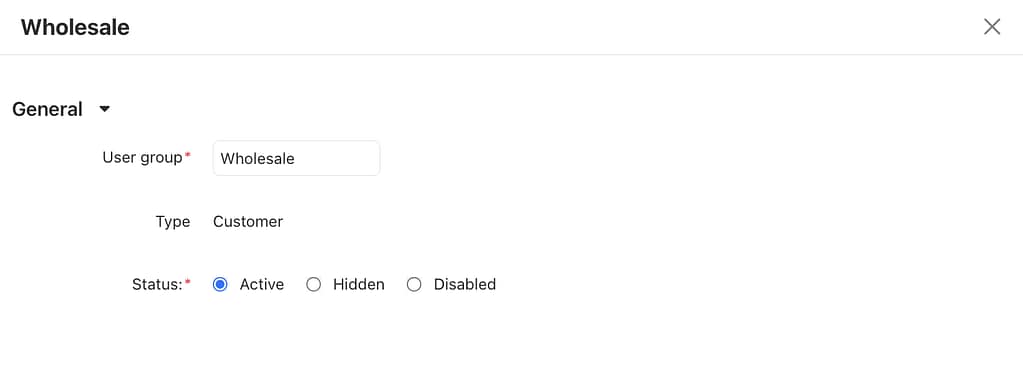
B2B eCommerce platforms support account-based commerce models where multiple users operate under a single organizational account. This allows companies to manage buyers, managers, and finance teams within a shared environment using role-based permissions and approval workflows.
Pricing & Customer-Specific Catalogs
B2B eCommerce Platforms enable advanced pricing logic including:
- wholesale pricing
- contract pricing rules
- customer-specific catalogs
- tiered discounts based on purchase volume or agreements
These capabilities ensure pricing flexibility for complex B2B relationships.
Bulk Ordering & Procurement Workflows
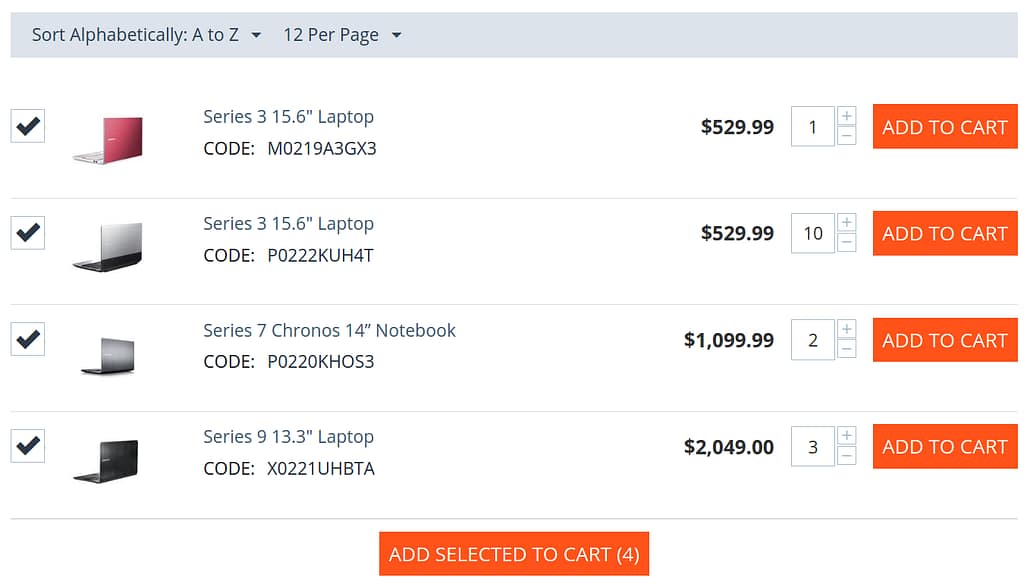
Bulk ordering is a core function of the B2B Order Management System, enabling efficient processing of large-volume purchases through optimized cart interfaces, repeat order functionality, and saved order templates.
Quote Management (RFQ)
RFQ workflows are part of the B2B Order Management System, supporting negotiation-based sales, quote approvals, and contract-driven purchasing cycles.
Multi-Storefront Architecture
Multi-storefront management is a capability of the Enterprise Digital Commerce Platform, allowing businesses to operate multiple branded storefronts for different regions, segments, or business models within a single system. Watch this video on YouTube to learn more about storefronts.
ERP, CRM & Enterprise Integrations
At the enterprise level, B2B platforms typically integrate with core business systems such as ERP, CRM, and PIM to ensure unified data flow across the organization. Enterprise platforms integrate with ERP, CRM, and PIM systems to synchronize product data, inventory, pricing, and customer information in real time across the organization.
Apps, Extensions & Ecosystem
B2B eCommerce Platforms extend functionality through app ecosystems that support AI tools, advanced search, tax automation, logistics, and workflow automation.
Analytics & Reporting
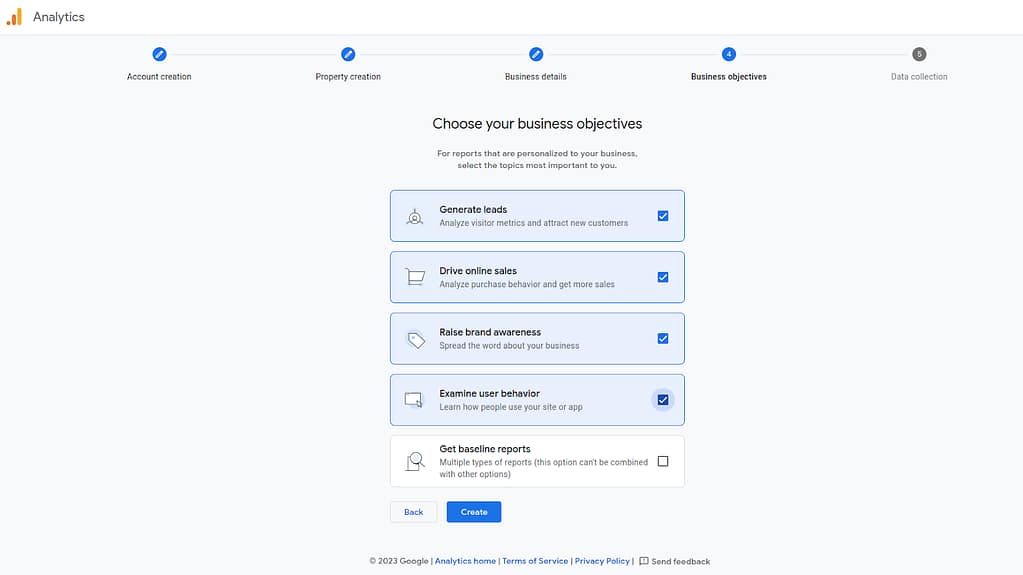
Advanced analytics provide insights into sales performance, customer behavior, and procurement efficiency, enabling data-driven decision-making in B2B operations.
Sales Enablement & Communication Tools
B2B Order Management System capabilities include CRM-like tools such as live chat, ticketing systems, and sales rep assignment to support complex enterprise sales cycles.
Core Capabilities of Modern B2B Commerce Systems
| Capability | Description |
|---|---|
| Custom Pricing & Price Lists | Supports wholesale pricing, contract pricing rules, tiered pricing, and customer-specific catalogs based on account agreements and purchase history. |
| Customer Grouping & Multi-User Accounts | Enables account-based commerce with organizational hierarchies, role-based permissions, and shared purchasing workflows across teams. |
| Flexible Shipping & Payment Terms | Provides support for purchase orders, credit limits, split shipments, and negotiated payment terms for enterprise buyers. |
| Bulk Ordering & Reordering | Optimized procurement workflows for high-volume orders, including repeat purchases and saved order templates. |
| Quote Management (RFQ) | Supports request-for-quote workflows, negotiation cycles, approval chains, and contract-based order finalization. |
| Sales Rep & Communication Tools | Includes sales representative assignment, live chat, order assistance, and integrated support/ticketing systems for complex deals. |
| ERP, CRM, PIM Integrations | Enables real-time synchronization of product data, inventory, pricing, and customer records across enterprise systems. |
| Multi-Storefront Architecture | Supports multiple branded storefronts, regional segmentation, and multi-business models within a single commerce system. |
| Apps, Integrations & Extensions | Extends functionality through AI tools, logistics automation, tax systems, and third-party API integrations. |
| Mobile Access & Commerce Apps | Provides responsive interfaces and native mobile applications for on-the-go procurement and order management. |
| Analytics & Reporting | Delivers actionable insights into sales performance, customer behavior, and procurement efficiency across all commerce channels. |
Modern B2B commerce is defined not by individual features, but by how well a system combines platform capabilities, order management workflows, and enterprise integrations into a unified architecture.
When choosing a B2B solution, focus on how it supports end-to-end processes — from pricing and ordering to integrations and scalability.
Best B2B eCommerce Software Solutions in 2026
There are a lot of appealing eCommerce B2B solutions on the market. Yet, we analyze and compare the most interesting ones.
CS-Cart Ultimate
CS-Cart Ultimate is a B2B eCommerce Platform designed for wholesalers, distributors, and manufacturers that need flexible pricing models, account-based commerce, and full control over their digital infrastructure.
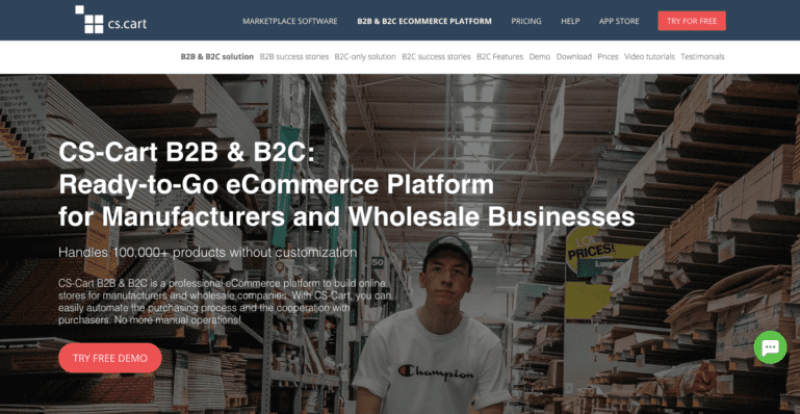
The platform supports essential B2B functionality such as wholesale pricing, customer-specific catalogs, bulk ordering, and contract pricing rules. This allows businesses to build personalized purchasing experiences for different customer groups and manage complex pricing structures without external systems.
Unlike SaaS solutions, CS-Cart is a self-hosted platform, giving companies full ownership of data, infrastructure, and customization. It also supports API integrations and multi-storefront management, making it suitable for businesses that operate both B2B and B2C channels within one scalable ecosystem.
CS-Cart is widely used by businesses that need to move beyond basic storefronts and build fully customizable commerce ecosystems.
SAP Commerce Cloud
SAP Commerce Cloud is an enterprise-grade Enterprise Digital Commerce Platform designed for large organizations with complex global B2B operations and deep ERP-driven processes.
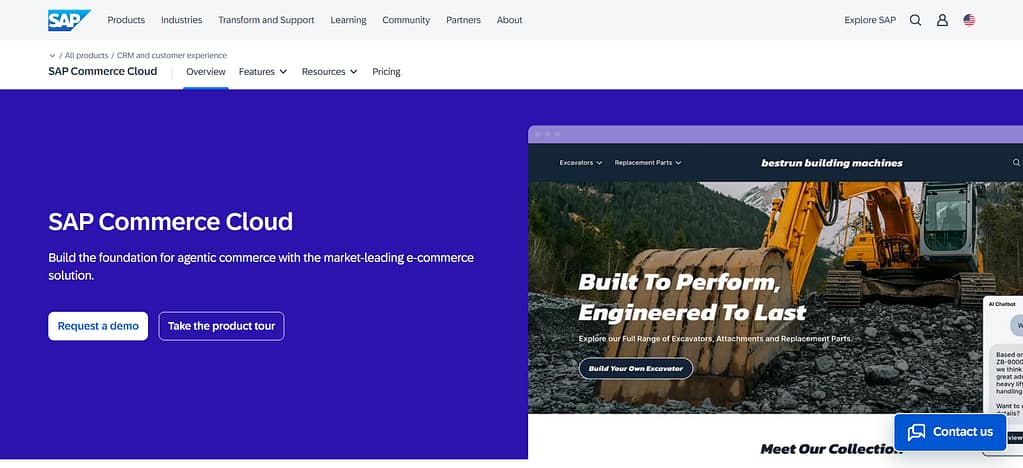
It supports advanced enterprise capabilities such as account-based commerce, customer-specific catalogs, and wholesale pricing, along with complex contract pricing rules and CPQ-style workflows. The platform is tightly integrated with SAP ERP systems, enabling real-time synchronization of pricing, inventory, and procurement data.
As part of the SAP ecosystem, it offers strong scalability, enterprise security, and multi-storefront management, making it suitable for global manufacturers, distributors, and large-scale wholesalers.
SAP Commerce Cloud is highly powerful but requires significant implementation resources and a dedicated technical team. Due to its complexity, it is typically used by enterprises that already operate within the SAP infrastructure.
Users often highlight its deep functionality and integration strength, but also mention long implementation cycles and high total cost of ownership.
Adobe Commerce (Magento)
Adobe Commerce (Magento) is a widely used B2B eCommerce Platform built for enterprise and mid-market companies that require high levels of customization and global scalability.
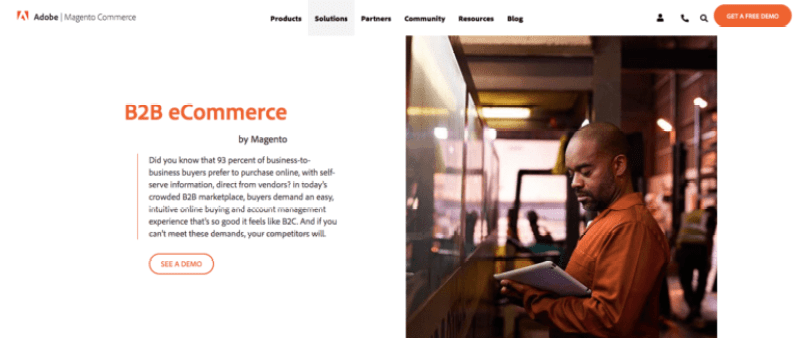
It provides advanced B2B capabilities including customer-specific catalogs, wholesale pricing, bulk ordering, and account-based commerce workflows. Magento also supports complex product structures and multi-store setups for businesses operating in multiple regions.
However, due to its high flexibility, Magento requires a strong technical team for setup and maintenance. While it offers deep customization and integration capabilities, businesses often face higher operational costs and longer implementation cycles compared to more ready-to-use solutions.
You may also be interested in reading: Magento vs CS-Cart: General Overview of Multi-Vendor Features
Magento for B2B has almost all mentioned above must-have features but unfortunately, there are user complaints about the interface complexity in Magento. People also say that Magento requires much time to configure before it can be used live.
BigCommerce B2B eCommerce Platform
BigCommerce is a cloud-based B2B eCommerce Platform designed for fast deployment and scalable online operations, especially for companies combining B2B and B2C sales.

It provides key B2B features such as customer-specific catalogs, wholesale pricing, and bulk ordering, along with account-based commerce functionality. Businesses can segment customers into groups and apply different pricing and purchasing rules.
As a SaaS solution, BigCommerce offers strong API integrations and ease of use, but customization and infrastructure control are limited compared to self-hosted platforms. It is often chosen by companies that prioritize speed-to-market over deep system flexibility.
BigCommerce is easier than Magento, but it still requires some time to be mastered because of the feature complexity. Rich documentation greatly helps beginners to learn the platform.
On forums, people say that BigCommerce is an excellent solution only for beginners and small businesses. There are also lots of user complaints about bad customer service. Well, there isn’t perfect customer service, is there?
Cloudfy
Cloudfy is a SaaS-based B2B eCommerce Platform designed for mid-market wholesalers and distributors that need a fast-to-deploy and fully managed solution.
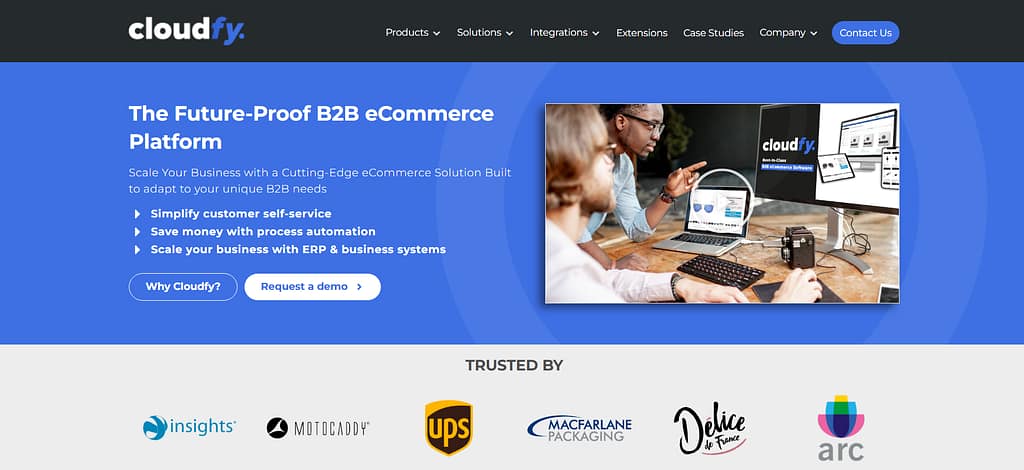
It provides essential B2B functionality such as customer-specific pricing, wholesale pricing rules, bulk ordering, and ERP integration capabilities. Businesses can quickly launch online procurement portals without complex infrastructure setup.
As a cloud-native solution, Cloudfy offers strong ease of use and fast deployment, making it suitable for companies transitioning from manual or legacy ordering systems to digital commerce.
However, as with most SaaS platforms, customization and deep architectural control are limited compared to self-hosted or composable enterprise systems.
Cloudfy is often chosen by companies that prioritize speed-to-market and operational simplicity over full system flexibility.
VTEX
VTEX is a composable Enterprise Digital Commerce Platform designed for businesses that need unified commerce, marketplace capabilities, and scalable multi-channel operations.
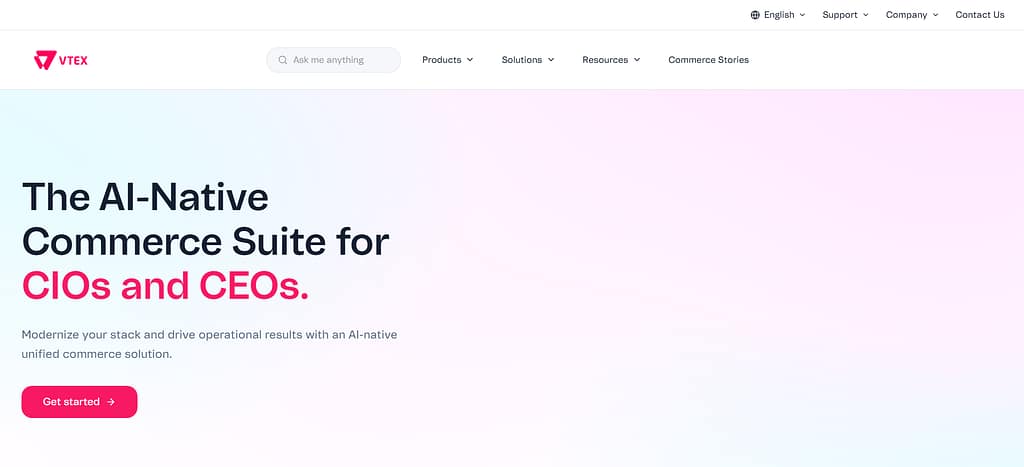
It enables account-based commerce, customer-specific catalogs, and wholesale pricing, along with advanced order management and multi-storefront architecture. The platform is widely used for building unified B2B and B2C ecosystems, including marketplace-driven business models.
VTEX is built on a cloud-native, API-first architecture, allowing businesses to extend functionality through microservices and integrations. It is particularly strong in scenarios where companies want to combine commerce, marketplace, and order management in one system.
While VTEX offers strong scalability and flexibility, it can require significant configuration effort and is typically adopted by mid-to-large enterprises with complex commerce requirements.
Users often highlight its unified commerce capabilities, but also mention a learning curve during initial implementation.
OROCommerce
OROCommerce is a specialized B2B eCommerce Platform focused on complex B2B and B2B2X business models, particularly in enterprise distribution and wholesale industries.
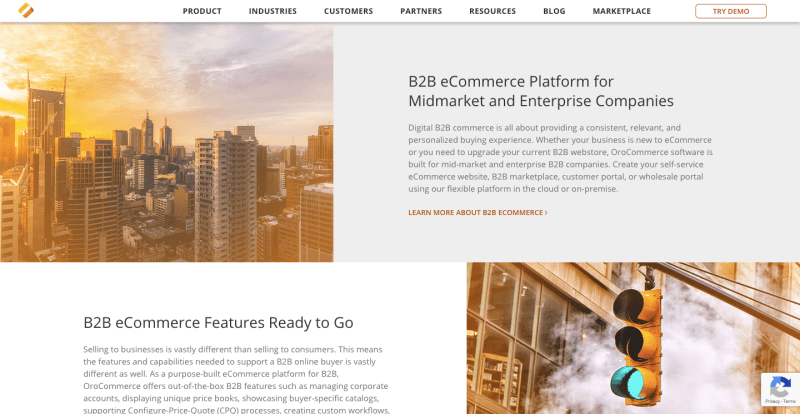
It provides strong account-based commerce features, including customer-specific pricing, catalogs, and role-based purchasing workflows. The platform is often used in environments where procurement processes are highly structured and require approval flows.
OROCommerce also functions closely with B2B CRM-like capabilities, supporting sales and customer management processes. However, due to its complexity, it requires technical expertise for implementation and ongoing customization.
Due to the platform’s flexibility and complexity, it’s not very transparent to operate and develop. Users say that you’ll probably need training to get used to OROCommerce and developers complain about the lack of development documentation. Also, there are no prices on the website so you’ll never know how much it will cost you to start a B2B shop on OROCommerce until you contact the company directly
Shift4Shop (formerly 3dcart)
Shift4Shop is a SaaS-based B2B eCommerce Platform that offers a quick way to launch online stores for small and mid-sized businesses.
It includes basic B2B functionality such as bulk ordering, customer groups, and pricing rules, allowing merchants to manage simple wholesale operations. The platform is designed for fast setup without deep technical knowledge.
However, compared to more advanced systems, Shift4Shop has limitations in multi-storefront architecture and advanced contract pricing rules, which may restrict scalability for complex B2B operations.
The cool thing about 3dcart is that it has almost all the must-have features for B2B customers mentioned above, except for multiple storefronts and advanced price list management features.
There are many complaints about 3dcart’s customer service and some users say they lost much money because of the unqualified 3dcart support staff. Although this platform is feature-rich, bad customer service can ruin it all.
Salesforce B2B Commerce Cloud
Salesforce B2B Commerce Cloud is an enterprise-grade Enterprise Digital Commerce Platform built for large organizations that require deep CRM integration and scalable architecture.
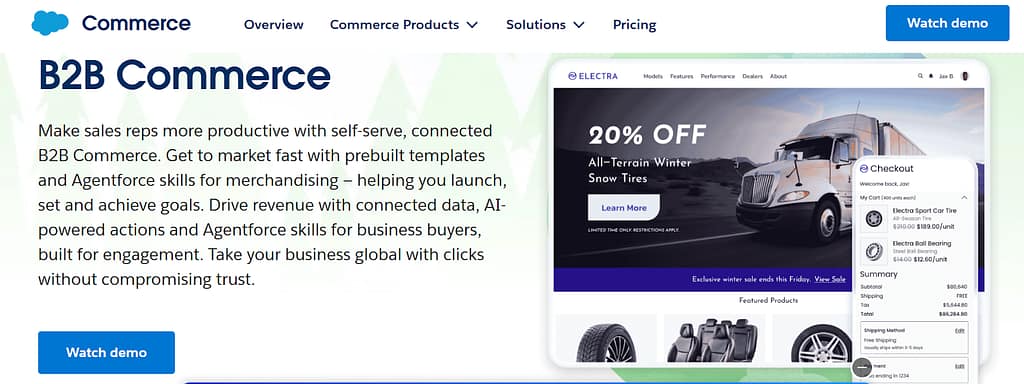
It supports advanced enterprise capabilities such as account-based commerce, API integrations, multi-storefront management, and enterprise security. The platform is tightly integrated with the Salesforce ecosystem, enabling unified customer data and AI-driven insights.
While powerful, Salesforce Commerce Cloud is complex and expensive to implement. It is best suited for enterprises that already rely on Salesforce infrastructure and need full integration across sales, service, and commerce operations.
X-Cart B2B eCommerce
X-Cart is a flexible B2B eCommerce Platform that supports both B2B and B2C business models through a single system.
It provides core functionality such as bulk ordering, pricing rules, and customer group management, enabling businesses to handle basic wholesale operations. The platform also supports integrations with external systems for inventory and order synchronization.
However, X-Cart lacks deeper native B2B capabilities such as advanced account-based commerce workflows and multi-storefront management, often requiring customization for complex enterprise use cases.
The main con of X-Cart is that it doesn’t have enough B2B-specific features and multiple storefronts that could be used independently for B2C and B2B commerce. Looks like you’ll need to customize the platform to be able to use it for a complex B2B eCommerce shop.
User reviews are okay in general but many customers don’t like the tech support that often can’t help with resolving the issues, the complexity of the software, and the lack of features and good customer service.
Commercetools
Commercetools is a headless Enterprise Digital Commerce Platform built on a composable, API-first architecture designed for global enterprise scalability.
It enables businesses to build highly customized commerce experiences with support for multi-storefront management, scalable architecture, API integrations, and enterprise security. Its modular structure allows companies to integrate commerce capabilities into any digital channel.
While extremely flexible, Commercetools requires a strong development team and significant technical investment. It is typically used by large enterprises with advanced omnichannel and composable commerce strategies.
Spryker B2B Commerce OS
Spryker is a modular Enterprise Digital Commerce Platform designed for complex B2B business models such as distributors, manufacturers, and large-scale marketplaces.

It offers advanced enterprise capabilities including API integrations, scalable architecture, multi-storefront management, and enterprise security. The platform supports flexible workflows for pricing, ordering, and customer segmentation.
Spryker is highly powerful but also complex, requiring experienced development teams. It is best suited for organizations that need full composability and long-term scalability across multiple business models.
Optimizely (InsiteCommerce)
Optimizely Commerce is a SaaS-based B2B Order Management System focused on simplifying complex B2B purchasing and order workflows.
It supports features such as order lifecycle management, multi-channel orders, automated fulfillment, and order routing rules, helping businesses streamline procurement processes.
While it offers solid integration capabilities, Optimizely has limitations in deep customization and advanced B2B architecture, making it more suitable for mid-market companies with moderate complexity.
There are not so many user testimonials about Optimizely on the web. They are mostly okay but users complain about a very long learning curve, costly upgrades, and dependence on third-party partners.
Pepperi
Pepperi is a cloud-based B2B Order Management System designed for wholesalers and consumer goods companies that require mobile-first sales operations.
It includes strong order management features such as order lifecycle management, automated fulfillment, and multi-channel orders, combined with account-based commerce and mobile ordering tools.
One of the key features of Pepperi is its mobile friendliness. It offers native mobile apps for Android and iOS with offline data support. Users also praise Pepperi’s web and mobile interface.
Users are satisfied with Pepperi in general, but some report terrible customer support that is not available on Friday and Saturday and laggy interface (beautiful though).
NetSuite SuiteCommerce
Oracle NetSuite SuiteCommerce is an enterprise B2B Order Management System integrated with ERP and CRM functionality for multichannel commerce operations.
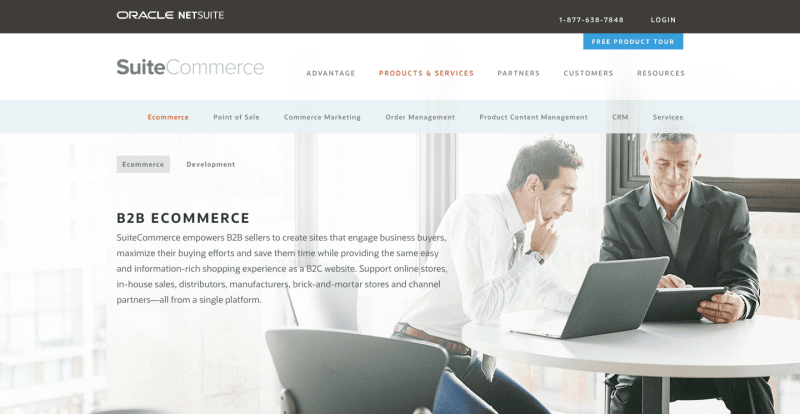
It supports order lifecycle management, multi-channel orders, automated fulfillment, and order routing rules, enabling businesses to connect online sales with warehouses, retail stores, and distributors.
Its biggest advantage is ecosystem integration, but the platform is complex and requires significant implementation effort, especially for businesses without existing Oracle infrastructure.
The key feature of SuiteCommerce is its multichannel nature. It allows you to connect an online store, a warehouse, a brick and mortar shop, distributors, manufacturers, and channel partners to a single ecosystem.
On the downside, users mention poor customer service and technical support, the complexity of the functionality and interface, and a very long learning curve.
Sana Commerce
Sana Commerce is an ERP-first B2B Order Management System designed to embed eCommerce directly into ERP environments such as SAP and Microsoft Dynamics.
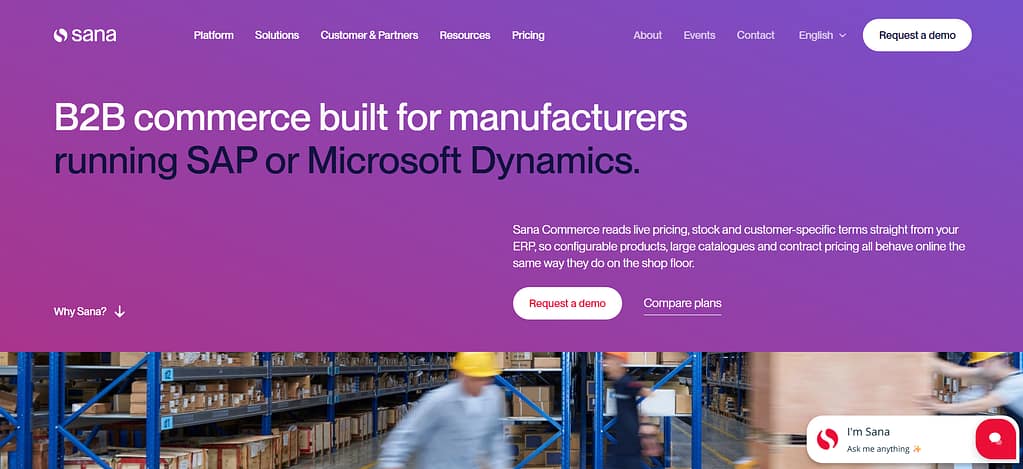
It focuses on real-time ERP-driven capabilities, including order lifecycle management, automated fulfillment, and accurate pricing and inventory synchronization. Businesses can manage complex procurement flows while ensuring that all data is always aligned with their ERP system.
Unlike traditional eCommerce platforms, Sana Commerce eliminates data duplication by relying directly on ERP systems as the single source of truth. This makes it especially effective for manufacturing, wholesale, and distribution companies.
Sana Commerce is valued for its strong ERP integration and operational accuracy, but it offers less flexibility in front-end customization compared to composable or headless platforms.
Shopify Plus
Shopify Plus is a cloud-based B2B eCommerce Platform designed for high-growth companies that need fast deployment and scalable infrastructure.
It includes B2B functionality such as customer-specific catalogs, wholesale pricing, bulk ordering, and account-based commerce through apps and built-in features.
While Shopify Plus is easy to use and highly scalable, it has limitations in deep customization and multi-store architecture compared to self-hosted or composable enterprise platforms.
Learn more about software from: Shopify or CS-Cart: Which Is Best for Building a Marketplace
Some people are not satisfied with customer services which Shopify provides. They also mention that this platform is not the user-friendly one and it might seem too complex at the beginning.
Miva
Miva is a flexible B2B eCommerce Platform designed for mid-sized and enterprise businesses that need a balance between usability and customization.

It supports bulk ordering, pricing rules, and account-based commerce, allowing businesses to manage wholesale operations efficiently. The platform also includes built-in tools for catalog management and order processing.
Miva offers strong performance and support, but some users report limitations in upgrade flexibility and advanced customization compared to more modern enterprise platforms.
Miva’s customers mention three main problems: unfair money-quality balance, problems after updates, and software issues like problems with bulk product editing.
How to Choose the Right B2B eCommerce Platform
A strong B2B eCommerce Platform should align with your business model, support long-term growth, and integrate seamlessly with your existing enterprise systems. Instead of focusing only on features, evaluate how the platform performs across key business and technical dimensions.
- Scalability and Growth Readiness. The platform should support increasing order volumes, large product catalogs, and multi-brand or multi-store operations. As your business expands, it must handle higher complexity without performance or architectural limitations.
- Integration Capabilities. Look for strong integration support with ERP, CRM, and PIM systems. Open APIs, middleware support, and pre-built connectors are essential for ensuring data consistency, automation, and real-time synchronization across business systems.
- Core B2B Functionality. A complete B2B solution must include capabilities such as: customer-specific catalogs, wholesale pricing and contract pricing rules, bulk ordering workflows, account-based commerce, multi-user company accounts and roles. These features define how effectively the platform supports complex B2B purchasing behavior.
- Security and Compliance. Enterprise-grade security is critical. The platform should comply with standards such as PCI DSS and GDPR, and provide strong authentication, role-based access control, and regular security updates.
- Customer Experience. Prioritize platforms that offer intuitive navigation, mobile responsiveness, and personalized buying experiences. In B2B commerce, buyer efficiency directly impacts order volume and retention.
- Support and Vendor Ecosystem. Evaluate the quality of vendor support, onboarding resources, documentation, and long-term product roadmap. Strong vendor partnership reduces implementation risks and ensures continuous platform evolution.
- Deployment Model and Ownership. Choose between SaaS (cloud-based) platforms for faster deployment and lower maintenance, or self-hosted solutions for full control, deeper customization, and infrastructure ownership.
Operational Considerations for Mid-Market Teams
For many mid-market companies, platform selection is not only a technical decision but also an operational one. Teams often accelerate implementation by working with experienced MSP or outsourcing partners to handle ERP/CRM integration, system monitoring, cybersecurity, and ongoing infrastructure management.
A co-managed approach allows internal teams to focus on business strategy while external specialists manage technical complexity such as system integration, performance optimization, and compliance.
When evaluating vendors in 2026, it is important to consider not only platform capabilities but also total cost of ownership, implementation effort, and long-term scalability.
Best B2B eCommerce Platforms for Different Business Types
Different businesses require different levels of functionality, scalability, and control. Below is a structured overview of the most suitable B2B eCommerce Platforms depending on company size and operational complexity.
For Small and Medium Businesses (SMBs)
SMBs typically prioritize fast launch, ease of use, and predictable costs. This is why many SMB-focused tools are categorized as B2B ecommerce software designed for rapid deployment and simplified operations. SaaS-based solutions and lightweight platforms are often the best fit.
Consider:
- Shopify is a user-friendly B2B eCommerce Platform designed for fast setup and scalable growth. It supports key B2B features such as custom price lists, bulk ordering, and account-based commerce workflows through built-in functionality and apps.
It is best suited for companies that want to launch quickly without managing infrastructure. - WooCommerce is an open-source solution built on WordPress, making it a flexible choice for SMBs already using the WordPress ecosystem. It supports B2B functionality through extensions, including wholesale pricing and bulk ordering, but may require additional plugins for advanced account-based commerce scenarios.
- Pepperi is a mobile-first B2B Order Management System designed for wholesalers and consumer goods companies. It focuses on order lifecycle management, multi-channel orders, and automated fulfillment, delivering a streamlined B2B buying experience across devices.
- Cloudfy is a SaaS-based B2B eCommerce Platform built for rapid deployment. It includes out-of-the-box features such as customer-specific catalogs, pricing rules, and ERP integrations, making it suitable for SMBs looking for a ready-to-use B2B solution. Such capabilities are typical for modern B2B ecommerce software solutions used in mid-market commerce environments.
For ERP-Centric B2B Operations
This category includes platforms deeply integrated with ERP systems, where operational accuracy and real-time data synchronization are critical. These systems are often referred to as ERP-driven B2B commerce solutions because of their operational focus.
- Sana Commerce is an ERP-first B2B Order Management System designed to embed commerce directly into ERP systems such as SAP and Microsoft Dynamics. It enables real-time synchronization of pricing, inventory, and orders by using ERP as the single source of truth. This reduces data duplication and improves operational accuracy in procurement-heavy industries such as manufacturing and wholesale.
- NetSuite SuiteCommerce is an ERP-connected B2B Order Management System designed for multichannel commerce operations. It supports order lifecycle management, automated fulfillment, and multi-channel orders, enabling businesses to connect online stores with warehouses, retail systems, and distribution networks within a single ecosystem.
For Enterprises and Complex B2B Markets
Enterprise businesses require scalability, deep customization, and strong system integration capabilities. You’ll be better served by:
- SAP Commerce Cloud is an enterprise-grade B2B eCommerce Platform designed for complex global operations. It supports account-based commerce, customer-specific catalogs, and wholesale pricing, along with deep integration into SAP enterprise ecosystems.
- Adobe Commerce is a highly flexible B2B eCommerce Platform supporting both B2B and B2C models. It offers advanced capabilities such as bulk ordering, contract pricing rules, and customer-specific catalogs, making it suitable for companies operating in multiple markets and segments.
- VTEX is a composable Enterprise Digital Commerce Platform designed for unified commerce and marketplace-driven business models. It supports multi-storefront architecture, account-based commerce, and flexible pricing structures. Its API-first approach allows businesses to combine commerce, marketplace, and order management capabilities within a single ecosystem. This positions VTEX as a modern B2B commerce solution built for unified commerce ecosystems.
- Spryker is a modular Enterprise Digital Commerce Platform built on a composable architecture. It enables scalable architecture, API integrations, multi-storefront management, and enterprise security, making it ideal for businesses with complex, multi-channel commerce models.
- CS-Cart is a highly customizable B2B eCommerce Platform designed for businesses that need flexibility, ownership, and scalability. It supports wholesale pricing, customer-specific catalogs, bulk ordering, and contract pricing rules, along with multi-storefront capabilities and API-based integrations. This makes it a flexible B2B ecommerce solution suitable for both traditional commerce and marketplace models. Unlike SaaS platforms, CS-Cart is self-hosted, allowing full control over infrastructure, customization, and long-term architecture decisions. It is often used for niche B2B portals, hybrid B2B/B2C models, and marketplace-style business setups.
Wie Gott In Frankreich Case Study: How a Local Food Business Launched a B2B Marketplace in Six Months

A European entrepreneur launched a marketplace for local food producers using CS-Cart, enabling individual storefronts for each seller and supporting unlimited categories and vendors. The platform’s scalability, one-time licensing, and multilingual support allowed the business to grow without technical barriers. Even with no technical background, the founder successfully built and expanded the marketplace, highlighting CS-Cart’s accessibility and flexibility.
Get more details about the case from our Case Study: How CS-Cart Unlimited Categories Raised Local Food Producers’eCommerce
B2B eCommerce Trends and Market State in 2026
The global B2B eCommerce market continues to expand beyond $18 trillion, but the real shift in 2026 is not just growth — it is the transformation toward AI-driven, composable, and autonomous commerce ecosystems.
Modern B2B commerce is evolving from static digital catalogs into intelligent systems where pricing, procurement, and order management are increasingly automated and data-driven.
In 2026, the key trends mainly deal with:
- AI Agents and Autonomous Commerce. AI is moving beyond assistance into execution. AI procurement agents and sales assistants now handle reordering, supplier selection, and purchase optimization, reducing manual workflows.
- Composable and Headless Architecture. Enterprises are shifting toward composable commerce platforms with API-first and microservices-based architectures. This enables faster innovation and integration across multiple channels and systems.
- AI-Driven Pricing and CPQ 2.0. Pricing is becoming fully dynamic through AI-powered CPQ systems, contract-based pricing rules, and real-time negotiation models that adjust offers based on demand and customer behavior.
- Embedded Commerce in Enterprise Systems. B2B commerce is increasingly embedded directly into ERP and CRM systems, allowing procurement and sales to operate without separate storefront dependencies.
- Unified Commerce Experience. Instead of traditional omnichannel, businesses now focus on unified commerce, where buyers interact seamlessly across web, mobile, ERP portals, and sales teams within one system.
- B2B Marketplaces and Ecosystem Expansion. B2B marketplaces continue to grow, but now function as ecosystem hubs, connecting suppliers, buyers, logistics providers, and financial services in one environment.
- Trust and Decision Intelligence. Reviews and social signals are evolving into AI-powered decision intelligence systems, helping buyers evaluate suppliers based on performance, reliability, and risk scoring.
- Digital Payments and Cross-Border Automation. Cross-border B2B transactions are becoming fully automated with multi-currency payments, tax compliance automation, and embedded financial workflows.
What Now? Key Takeaways for B2B Projects in 2026
B2B eCommerce in 2026 is defined by a shift from manual and structured purchasing to intelligent, automated, and composable commerce ecosystems.
Companies that want to stay competitive should focus on:
- AI-native architecture
- integration flexibility
- automation of procurement workflows
- long-term scalability through composable systems
There is no universal platform that fits every business. The right choice depends on how well the system supports automation, integrations, and future AI-driven workflows. Businesses planning to support multiple sellers or expand into marketplace models should evaluate eCommerce marketplace software that combines flexible vendor management, automation, and long-term scalability.
Before selecting a platform, businesses should evaluate real-world demos, integration capabilities, and long-term adaptability — not just feature lists. This is especially important when comparing different B2B ecommerce software solutions and B2B portal software options.
Keep in mind: there’s no perfect platform for your business. You will need to customize it more or less so that it suits your business processes and goals. So, before you decide, contact each vendor from this list, request a demo, and make sure you can customize and scale the platform to meet your needs.
Start with CS-Cart B2B & B2C and explore the rest of this B2B eCommerce comparison to find the platform that fits your needs. Here you can create a free personal demo of CS-Cart and play with it for 15 days.
FAQ
How easy is ERP integration with a B2B eCommerce platform?
Modern B2B eCommerce Platforms use API-first architecture, so ERP/CRM/PIM integrations are usually handled via APIs, webhooks, or middleware. Complexity depends on system landscape and legacy tools.
Are there free B2B eCommerce solutions?
Only in trials or limited SaaS plans. Full B2B functionality (pricing rules, catalogs, bulk ordering) is almost always available in paid plans.
SaaS vs Open-Source: Which Is Better for B2B?
SaaS is faster to launch, but limited in customization. Open-source or self-hosted platforms provide full control, scalability, and deeper B2B customization.
How long does it take to launch a B2B platform?
From a few weeks (SaaS MVP) to several months for enterprise setups with ERP integration, custom pricing, and multi-store architecture.
How to choose a B2B eCommerce platform?
Focus on scalability, integrations, and B2B features: customer-specific catalogs, contract pricing rules, bulk ordering, and account-based commerce.
What is a B2B referral program?
A referral system where business customers bring new clients. It improves trust and typically delivers higher conversion and lifetime value than paid channels.
What is an AI-native B2B eCommerce platform?
It’s a platform that uses AI for pricing, product recommendations, and procurement automation (AI agents, predictive ordering, smart catalogs).
What is composable commerce in B2B?
A modular architecture where commerce functions (checkout, pricing, CMS, OMS) are independent services connected via APIs for flexibility and scalability.

eCommerce expert with 10+ years of experience in marketplace management and consumer behavior. Gayane tracks the latest industry trends to provide businesses with analytical, actionable insights.