Should you continue scaling a single-brand online store? Launch a multi-vendor marketplace? Expand into B2B commerce? Add multiple storefronts for different markets? Or combine several models under one platform?
The answer depends on your business goals, operational maturity, and growth strategy.
For growing companies with established operations, choosing the wrong model can create years of technical debt, manual work, and costly migrations.
Whether you’re evaluating a platform migration, planning a marketplace launch, or exploring new business models, understanding the differences between an eCommerce store and a marketplace is the first step.
Our team can help you evaluate the best model for your business and create a migration roadmap that minimizes risk and disruption.
2. Marketplaces generally scale faster because every new seller adds products, inventory, and customer acquisition opportunities.
3. The most successful commerce businesses in 2026 increasingly adopt a hybrid approach, combining direct sales, B2B channels, marketplaces, and multiple storefronts.
What Is an eCommerce Store?
An eCommerce store is an online business where a single company sells products or services directly to customers through its own website. The business owns the inventory, controls pricing, manages customer relationships, processes payments, and fulfills orders.
Examples of eCommerce stores include Apple, Gymshark, Allbirds, Warby Parker, and other brands that sell directly to consumers through their own websites.
Unlike marketplaces, where multiple sellers compete on the same platform, an eCommerce store operates under a single brand. This single-merchant architecture gives businesses complete control over pricing, branding, inventory, and customer relationships.
For growing businesses, an eCommerce store offers complete control over the customer experience, branding, marketing strategy, and customer data. This control is particularly valuable in 2026, as AI-driven shopping, personalized recommendations, and customer retention become increasingly important competitive advantages.
Read more: AI in eCommerce: How Artificial Intelligence Is Transforming Online Shopping
How an eCommerce Store Works
In a traditional eCommerce model, customers visit a merchant’s website, browse products, place orders, and complete checkout directly with the store owner.
The merchant is responsible for:
- Product sourcing or manufacturing
- Inventory management
- Pricing strategy
- Marketing and customer acquisition
- Payment processing
- Shipping and fulfillment
- Customer support
Revenue comes directly from product sales. The business retains full ownership of customer relationships and can build loyalty programs, subscription models, personalized marketing campaigns, and repeat-purchase strategies without relying on third-party platforms.
This approach is ideal for brands with unique products, strong customer loyalty, or specialized expertise within a specific market segment.
Core Components of an Online Store
Regardless of industry, most successful eCommerce stores include several core components:
Product Catalog
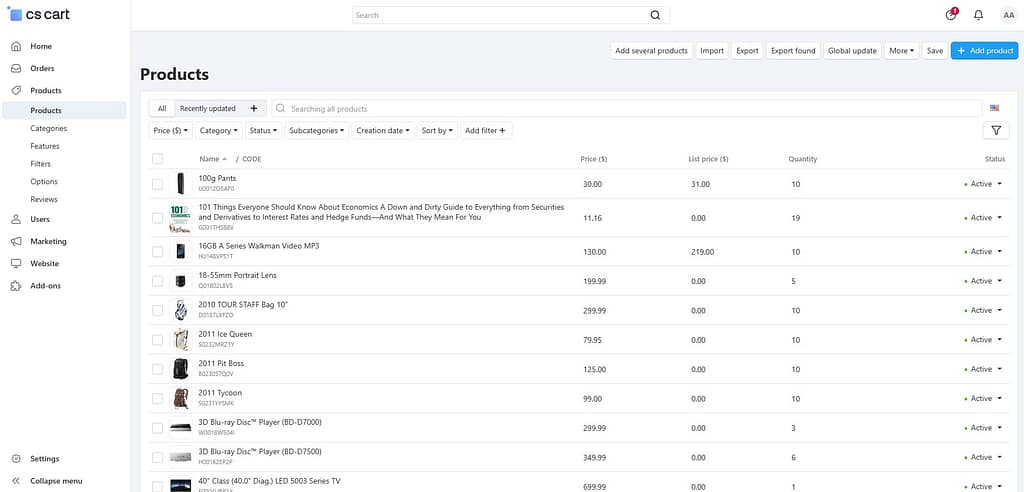
A centralized system for managing products, categories, attributes, pricing, inventory, and product content.
Shopping Cart and Checkout
The purchase flow that allows customers to select products, complete payments through payment gateway integration, and place orders securely. An optimized checkout funnel helps reduce cart abandonment and improve conversion rates by minimizing friction during the purchasing process.
Order Management
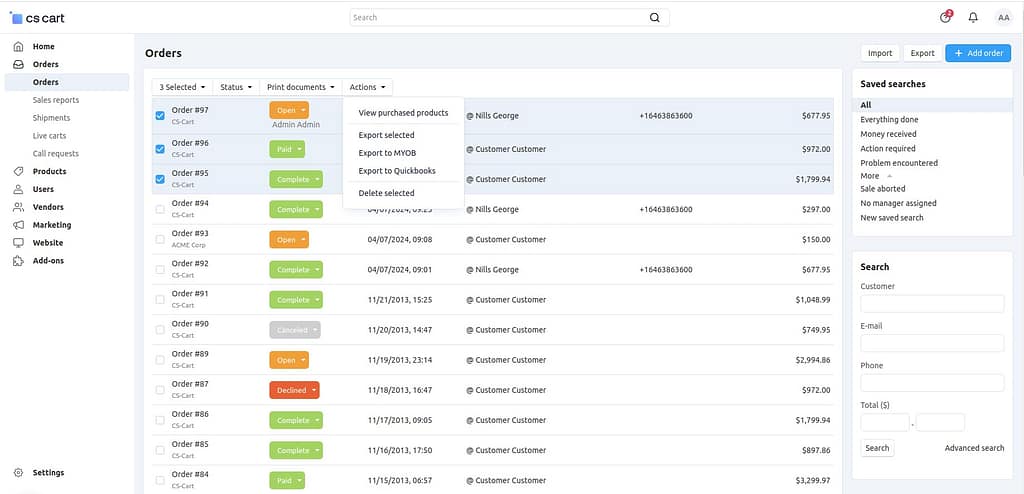
Tools for processing orders, handling returns, tracking shipments, and managing fulfillment workflows. Together, these capabilities form the order fulfillment system that coordinates inventory, shipping, returns, and delivery operations.
Customer Accounts
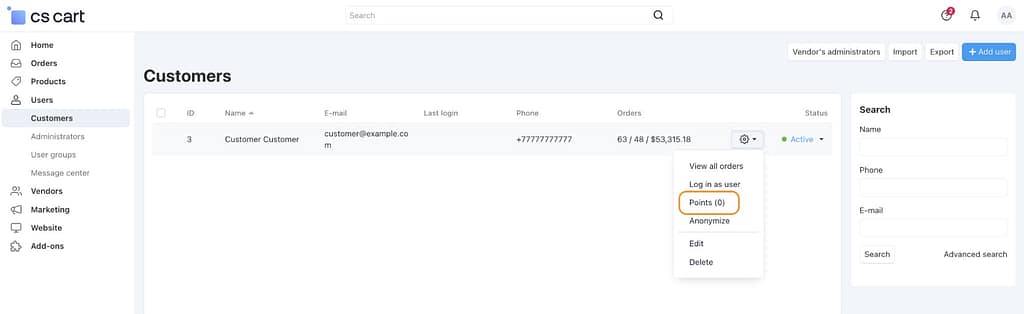
User profiles that store purchase history, addresses, loyalty points, subscriptions, and preferences. Customer data collected through these accounts helps businesses implement marketing campaigns, personalize offers, and improve customer retention.
Marketing and Analytics
SEO, email marketing, promotions, product recommendations, conversion tracking, and customer segmentation tools.
Integrations
Connections with ERP systems, CRM software, accounting platforms, shipping providers, payment gateways, and inventory management solutions.
As businesses grow, these components often become increasingly interconnected. This is why many companies eventually outgrow entry-level platforms and require more flexible infrastructure that can support complex workflows, automation, and multiple sales channels.
What Is a Marketplace?
A marketplace is an eCommerce platform where multiple independent sellers offer products or services to customers through a shared website. Together, these participants create a multi-vendor ecosystem in which independent businesses share infrastructure while serving the same customer base.
Examples of online marketplaces include Amazon Marketplace, Etsy, eBay, Allegro, Mercado Libre, and thousands of niche B2B and industry-specific marketplaces.
Instead of owning inventory, the marketplace operator creates the infrastructure that connects buyers and sellers. The platform manages vendor onboarding, product listings, commissions, payments, and customer interactions while allowing sellers to manage their own catalogs and orders.
Popular Marketplace Models
- B2C (Business-to-Consumer) — businesses sell directly to consumers (Amazon).
- B2B (Business-to-Business) — suppliers sell to other businesses.
- C2C (Consumer-to-Consumer) — individuals sell directly to other individuals (eBay, Craigslist).
Marketplace businesses have become one of the fastest-growing digital commerce models because they can scale product selection and seller participation without proportionally increasing inventory investment.
Read more: What is a Marketplace Platform: The Fullest Explainer
How an Online Marketplace Works
A marketplace acts as an intermediary between buyers and multiple sellers. This form of platform intermediation allows the marketplace operator to facilitate transactions without owning the products being sold.
The marketplace owner typically provides:
- Seller onboarding and vendor registration
- Product catalog infrastructure
- Search and navigation tools
- Payment processing
- Commission management
- Marketing and customer acquisition
- Marketplace governance and quality control
Sellers upload products, manage inventory, process orders, and handle payment processing and fulfillment according to marketplace rules.
Customers benefit from wider product selection, competitive pricing, and the convenience of purchasing from multiple sellers within a single platform.
How Marketplaces Make Money
Unlike traditional online stores, marketplaces generate revenue without necessarily owning inventory.
Common marketplace revenue models include:
- Sales Commissions. Most marketplaces operate on a commission-based revenue model, earning a percentage of every completed transaction.
- Subscription Fees. Vendors pay monthly or annual fees to access the platform.
- Listing Fees. Sellers pay to publish products or service offerings.
- Advertising Revenue. Vendors purchase sponsored placements, promoted listings, or marketplace advertising.
- Value-Added Services. Additional revenue comes from fulfillment services, premium analytics, payment processing, logistics support, or lead generation tools.
Because marketplaces can earn revenue from thousands of sellers simultaneously, they often achieve greater scalability than single-merchant stores once critical mass is reached.
Learn more from: Monetary Relations with Vendors
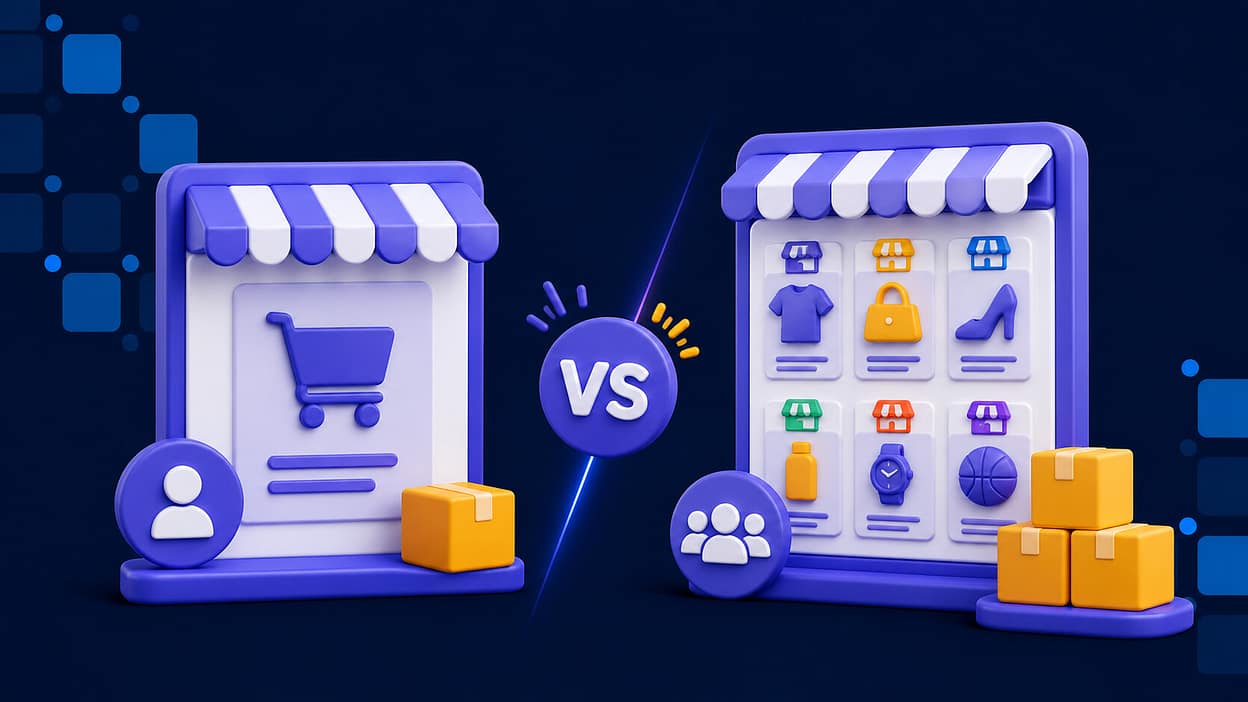
eCommerce Store vs Marketplace
People often confuse “an eCommerce platform” with “an eCommerce marketplace”, but they serve fundamentally different purposes in the digital economy. An eCommerce platform is essentially the toolkit or foundation that businesses use to build and manage their own online stores or marketplaces. It provides the necessary technology and services to operate an eCommerce website effectively.
On the other hand, an eCommerce marketplace acts more like a virtual shopping center where multiple sellers can list their products to a common audience. It’s a ready-made platform where transactions between buyers and sellers occur directly. Think of the platform as the infrastructure—like roads and utilities—while the marketplace is the bustling community that uses that infrastructure to engage and transact.
Dmitry,
expert in eCommerce and Head of Marketing at CS-Cart
While both models enable online selling, they operate very differently in terms of ownership, scalability, customer relationships, and revenue generation. Understanding the difference between an eCommerce platform and a marketplace is essential when choosing the right technology and business model for long-term growth.
Many businesses also compare marketplace vs platform, but these terms describe different concepts: a platform is the technology that powers online commerce, while a marketplace is one of the business models that runs on it.
Key Differences Between eCommerce Stores and Marketplaces
| Factor | eCommerce Store | Marketplace |
|---|---|---|
| Sellers | Single merchant | Multiple vendors |
| Inventory Ownership | Owned by merchant | Owned by vendors |
| Product Selection | Limited to merchant catalog | Expands with every new seller |
| Revenue Source | Product sales | Commissions, subscriptions, ads, services |
| Customer Data | Fully owned | Shared platform relationship |
| Operational Complexity | Lower initially | Higher initially |
| Scalability | Product and inventory dependent | Vendor-driven growth |
| Customer Experience | Fully controlled | Shared between platform and vendors |
| Time to Critical Mass | Faster launch | Longer launch, larger upside |
| Network Effects | Limited | Strong |
Ownership Control and Customer Data
One of the most significant differences between an eCommerce store and a marketplace is control.
With an online store, the merchant owns:
- Customer relationships
- Purchase history
- Marketing channels
- Loyalty programs
- Brand experience
- Product strategy
This ownership allows businesses to maximize customer lifetime value, build stronger long-term relationships, and maintain direct customer relationships without intermediaries.
Marketplaces operate differently. While marketplace operators still collect valuable platform-wide data, individual vendors maintain a portion of customer interactions. The experience is shared between the marketplace brand and participating sellers.
Read more: Marketplace Seller Management: How to Control eCommerce Marketplace Vendors
For businesses focused on customer retention, personalization, and brand equity, direct ownership can be a major advantage.
For businesses focused on scale, category expansion, and network effects, the marketplace model often provides greater long-term growth opportunities.
Revenue Model Differences
An eCommerce store grows primarily by increasing:
- Traffic
- Conversion rates
- Average order value
- Customer lifetime value
- Product assortment
Revenue is directly tied to the merchant’s ability to source, stock, market, and sell products.
A marketplace introduces additional revenue drivers.
Revenue grows through:
- More vendors
- More products
- More transactions
- Higher commissions
- Vendor subscriptions
- Advertising sales
- Additional services
This distinction creates fundamentally different business economics.
Get more insights from: Marketplace Monetization: How to Monetize Your Marketplace and Boost Revenue
A marketplace scales by enabling more transactions between buyers and sellers.
This is why many mature eCommerce businesses eventually explore marketplace, B2B, or hybrid commerce models. Businesses with an established customer base often use marketplaces to expand their product assortment without significantly increasing inventory investments.
Once a company has optimized its own sales operation, expanding into a platform business can unlock entirely new revenue streams without requiring proportional growth in inventory and operational overhead.
Pros and Cons of eCommerce Stores and Marketplaces
There is no universally better model. The best choice depends on your business goals, growth strategy, and whether you want to sell your own products or build a platform where multiple sellers can transact. In general, an eCommerce store is better for businesses focused on brand ownership, direct customer relationships, and selling their own products. A marketplace is better for businesses that want to connect buyers and sellers, expand product selection without owning inventory, and generate revenue from platform transactions.
Advantages and Disadvantages of eCommerce Stores
Advantages
- Full Control Over Your Business. You control pricing strategies, branding, customer experience, promotions, and product strategy without relying on third-party sellers.
- Direct Ownership of Customer Data. Every interaction belongs to your business. This makes it easier to build loyalty programs, improve retention, personalize marketing, and increase customer lifetime value.
- Higher Margins. Since there are no vendor payouts or commission-sharing structures, you keep the full profit margin on every sale.
- Simpler Operations. Managing a single catalog, fulfillment process, and product strategy is generally easier than coordinating multiple vendors.
- Faster Launch. A traditional online store can often be launched faster because there is no need to recruit vendors or establish marketplace governance processes.
Disadvantages
- Growth Depends on Your Resources. Every new product, category, or market expansion requires additional inventory, operational capacity, and investment.
- Higher Inventory Risk. You are responsible for purchasing, storing, and managing products.
- Limited Product Selection. Your catalog is restricted by your sourcing capabilities and inventory budget.
- Customer Acquisition Costs Remain Your Responsibility. Unlike marketplaces that benefit from vendor-driven growth, all traffic and customer acquisition efforts depend on your business.
Advantages and Disadvantages of Marketplaces
Advantages
- Scalable Growth Model. Vendors often contribute their own traffic, marketing efforts, and customer bases, helping marketplaces scale faster than single-merchant stores.
- Lower Inventory Risk. Marketplace operators typically do not own inventory, reducing operational complexity and financial exposure.
- Multiple Revenue Streams. Revenue can come from commissions, subscriptions, advertising, listing fees, premium services, and logistics offerings.
- Network Effects. As more vendors join, product selection improves. Better selection attracts more customers, creating a growth cycle that can accelerate over time.
- Faster Category Expansion. New product categories can be added by onboarding vendors rather than sourcing inventory internally.
Disadvantages
- Higher Operational Complexity. Marketplace operators must manage vendor onboarding, quality standards, commissions, disputes, and platform governance.
- Longer Path to Scale. A marketplace requires both buyers and sellers. Building liquidity on both sides takes time.
- Shared Customer Experience. The quality of customer interactions depends partly on vendor performance.
- Vendor Acquisition Becomes a Core Function. Success depends not only on attracting customers but also on continuously recruiting and retaining sellers.
Marketplace operators must simultaneously attract buyers and sellers, enforce quality standards, resolve disputes, and maintain a healthy balance between supply and demand. This operational complexity is one of the biggest challenges of marketplace growth.
How to Choose Between an eCommerce Store and a Marketplace
The decision should be based on where your business is today and where you want it to be in three to five years.
For many growing businesses, the question is not whether to choose one model forever. Instead, it is whether the chosen platform can support future expansion into additional business models without requiring a complete replatforming project.
When eCommerce Stores Are the Right Fit
Businesses that want to build their own eCommerce store or own eCommerce site typically prioritize brand ownership, customer relationships, and ongoing flexibility.
An online store is often the best choice when:
- You sell your own products or services.
- Brand identity and customer experience are strategic priorities.
- You want complete control over pricing and customer relationships.
- Your product catalog is manageable internally.
- You want to launch quickly with fewer operational dependencies.
This model works particularly well for manufacturers, D2C brands, wholesalers, and retailers with specialized product offerings.
If your primary goal is maximizing brand equity, customer loyalty, and profit margins, a traditional eCommerce store is often the strongest starting point.
When Marketplaces Are the Right Fit
A marketplace becomes attractive when:
- You want to scale product selection without owning inventory.
- You operate within a fragmented industry with many suppliers.
- You want to create a platform business rather than simply sell products.
- You see opportunities to connect buyers and sellers within a niche.
- You want multiple revenue streams beyond direct product sales.
Marketplaces are commonly successful in industries such as wholesale, automotive, services, fashion, healthcare, construction, and specialized B2B sectors.
For businesses seeking exponential growth through network effects, the marketplace model often provides greater long-term upside.
Key Factors to Help You Decide
Business Goals and Strategy
Start by defining your long-term vision.
Ask yourself:
- Do you want to become a stronger retailer?
- Do you want to become a platform connecting buyers and sellers?
- Do you plan to expand into B2B, wholesale, or additional markets?
- Will you eventually need multiple storefronts or regional websites?
The answers often determine which model makes the most sense.
Many businesses start with an online store and later evolve into a marketplace or hybrid commerce model as they grow.
Budget and Time to Launch
Traditional online stores typically require less investment and can be launched faster.
Marketplaces usually involve:
- Seller onboarding processes
- Commission structures
- Vendor management tools
- Additional workflows and automation
If speed to market is the primary objective, an online store often provides the shortest path.
If long-term scalability is the priority, investing in marketplace infrastructure early may create greater opportunities later.
Product Catalog and Scalability Needs
Consider how your catalog will grow.
If your business plans to manage products internally, an eCommerce store may remain sufficient for years.
If growth depends on expanding product selection across multiple suppliers, vendors, or merchants, a marketplace offers a more scalable approach.
This factor becomes especially important as businesses move into new categories, regions, or customer segments.
Customer Acquisition Strategy
Customer acquisition works differently for each model.
An online store relies entirely on:
- SEO
- Paid advertising
- Email marketing
- Social commerce
- Brand awareness
Marketplaces benefit from additional growth channels because vendors often contribute their own audiences and marketing efforts. Their marketing activities also help drive traffic to the marketplace.
The result can be lower customer acquisition costs once marketplace network effects begin to take hold.
Revenue Expectations
Finally, consider how you want the business to generate revenue.
An online store earns revenue primarily through product sales.
A marketplace can monetize through:
- Commissions
- Vendor subscriptions
- Advertising
- Sponsored listings
- Premium services
- Fulfillment and logistics offerings
The marketplace model often provides more diversified revenue streams, while the eCommerce model typically offers higher margins per product sold.
For many established businesses, the most future-proof strategy is not choosing one model over the other. It is selecting a platform that allows both models to coexist and evolve as the business grows.
Build and Scale Both Models with CS-Cart
The eCommerce vs marketplace debate often assumes businesses must choose one model and stick with it forever. In reality, many successful companies evolve over time.
A retailer launches an online store, expands into B2B sales, adds regional storefronts, introduces third-party vendors, and eventually becomes a marketplace operator. Others start as niche marketplaces and later launch their own private-label products.
One Platform for eCommerce Stores and Marketplaces
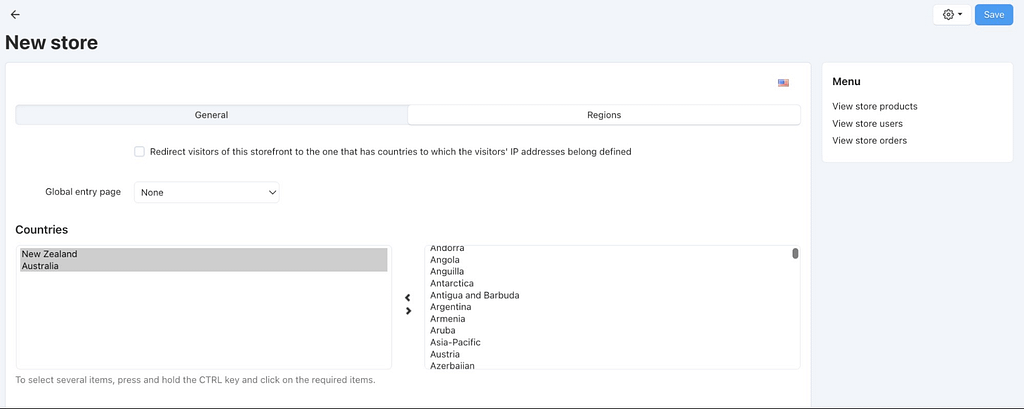
CS-Cart is designed to support multiple commerce models from a single technology foundation.
Whether you’re operating:
- A traditional online store
- A B2B commerce portal
- A multi-store business
- A multi-vendor marketplace
- A hybrid commerce ecosystem
you can manage growth without rebuilding your infrastructure from scratch.
This flexibility is particularly important for mid-sized and growing businesses that expect their operational requirements to evolve over time.
Instead of replacing your platform every few years, you can expand capabilities as new opportunities emerge.
How CS-Cart Supports eCommerce Stores
For businesses focused on direct sales, CS-Cart Store Builder provides the tools needed to operate and scale a modern online store.
Key capabilities include:
- Complete ownership of your customer data
- Open-code architecture for unlimited customization
- Advanced product catalog management
- B2B functionality and customer segmentation
- Multi-storefront management
- Integrations with CRM, ERP, inventory, and payment systems
- SEO and marketing tools
- API-first architecture for future expansion
Unlike many SaaS platforms, businesses retain full control over their infrastructure, integrations, and growth strategy.
This makes CS-Cart especially attractive for companies that have outgrown entry-level platforms and need greater flexibility without moving to expensive enterprise software.
How CS-Cart Supports Multi Vendor Marketplaces
CS-Cart Multi-Vendor is purpose-built for marketplace businesses. It serves as a complete multi-vendor management system, allowing operators to manage sellers, products, commissions, and marketplace operations from one admin panel.
The platform includes marketplace functionality out of the box, helping companies reduce development costs and accelerate time to market.
Core marketplace features include:
- Vendor onboarding and management
- Individual vendor dashboards
- Commission management
- Vendor payouts and split payment processing
- Product moderation workflows
- Vendor subscription plans
- Multi-vendor order management
- Marketplace analytics
- Mobile applications and API integrations
Because the platform is open-code, businesses can adapt workflows, commission structures, and user experiences to fit specific industries and business models.
Whether you’re building a B2C marketplace, B2B procurement platform, or niche industry ecosystem, CS-Cart provides the flexibility needed for long-term growth.
Key Capabilities for Scaling
As businesses grow, technology requirements become less about launching and more about scaling efficiently. Its scalable architecture supports growing product catalogs, increasing transaction volumes, and expanding vendor ecosystems.
CS-Cart provides several capabilities that support long-term growth:
- Open-Code Flexibility. Modify business logic, integrations, workflows, and user experiences without platform restrictions.
- Multi-Storefront Management. Operate multiple brands, regions, languages, or customer segments from a centralized administration environment.
- B2B and B2C Support. Serve wholesale and retail customers on the same platform.
- Marketplace Expansion. Add third-party sellers and new revenue streams without replacing your existing infrastructure.
- Integration Ecosystem. Connect ERP systems, CRM platforms, inventory software, shipping providers, payment gateways, and custom business applications, while supporting modular extensibility through add-ons, APIs, and custom modules.
- Performance and Scalability. Support large product catalogs, high transaction volumes, and growing vendor ecosystems as your business expands.
Future of Digital Commerce
The distinction between eCommerce stores and marketplaces is becoming less rigid every year.
As customer expectations evolve and new technologies emerge, successful businesses increasingly combine multiple commerce models, sales channels, and revenue streams into a unified ecosystem.
Growth of Multi Vendor Ecosystems
Marketplaces continue to gain market share across both consumer and B2B commerce.
The reason is simple: marketplaces scale faster.
Every new vendor adds:
- More products
- More expertise
- More inventory
- More potential customers
This network effect allows marketplace operators to expand faster than businesses that rely solely on internally managed inventory.
At the same time, niche and industry-specific marketplaces are growing rapidly as buyers increasingly prefer specialized platforms over general-purpose marketplaces.
For many businesses, becoming a platform can unlock growth opportunities that are difficult to achieve through traditional retail alone.
AI and Automation in Commerce
Artificial intelligence is reshaping every stage of the customer journey.
AI-powered commerce is moving beyond simple product recommendations toward:
- Intelligent search
- Personalized merchandising
- Demand forecasting
- Dynamic pricing
- Inventory optimization
- Customer service automation
- Content generation
Meanwhile, AI assistants are becoming an important product discovery channel.
Instead of browsing dozens of pages, consumers increasingly ask AI tools for recommendations and purchase advice.
This shift makes structured product data, automation, and operational efficiency more important than ever.
Businesses that automate repetitive processes and improve data quality will be better positioned to compete in the AI-driven commerce landscape.
Read more: AI in eCommerce: How Artificial Intelligence Is Transforming Online Shopping
Omnichannel and Platform Convergence
Customers no longer interact with a single sales channel.
They discover products through:
- Search engines
- AI assistants
- Social commerce
- Marketplaces
- Mobile apps
- Brand websites
- Physical locations
As a result, commerce platforms are evolving into centralized operational hubs that coordinate inventory, orders, customers, and marketing across multiple channels.
The future belongs to businesses that can manage these channels through a unified infrastructure rather than disconnected systems.
Hybrid Commerce: Combining eCommerce and Marketplace Models
Perhaps the most important trend is the rise of hybrid commerce.
Instead of choosing between an online store and a marketplace, many businesses are combining both approaches.
A company may:
- Sell its own products directly
- Host third-party sellers
- Operate multiple storefronts
- Serve both B2B and B2C customers
- Monetize through product sales and commissions simultaneously
This approach provides the control and customer ownership of traditional eCommerce while also benefiting from the scalability and network effects of a marketplace.
For scaling businesses, hybrid commerce often represents the most resilient long-term strategy.
It allows companies to diversify revenue streams, expand product selection, reduce dependency on a single channel, and adapt to changing market conditions without rebuilding their technology stack.
FAQ
What Is the Difference Between eCommerce and Marketplace?
The main difference between eCommerce and a marketplace is that an eCommerce store sells products from one business, while a marketplace connects multiple independent sellers with buyers.
Is Amazon a Marketplace or an eCommerce Platform?
Amazon is primarily an online marketplace because most products are sold by third-party sellers, although Amazon also sells products directly.
Can a Business Run Both eCommerce and Marketplace?
Yes, many businesses use a hybrid model that combines direct sales with third-party vendors on the same platform.
Which Model Is Better for Startups?
eCommerce is usually easier to launch, while marketplaces offer greater scalability but require attracting both buyers and sellers.
What Is an eCommerce Marketplace?
An eCommerce marketplace is a platform where multiple vendors sell products or services through a shared website managed by a marketplace operator.
Final Thoughts
Choosing between an eCommerce store and a marketplace means selecting the approach that best aligns with your business goals, operational capabilities, and growth strategy.
An eCommerce store offers complete control over your brand, customer relationships, and product experience. A marketplace provides greater scalability, diversified revenue streams, and the potential to benefit from network effects. Increasingly, successful businesses combine both models to create a flexible commerce ecosystem that can evolve alongside their ambitions.
As digital commerce continues to shift toward AI-driven discovery, omnichannel experiences, and platform-based business models, the companies that succeed will be those that build for adaptability—not just for today’s requirements.
Whether you’re planning your first online store, evaluating a marketplace opportunity, expanding into B2B commerce, or preparing for international growth, choosing the right platform today can eliminate costly migrations and operational limitations tomorrow.
Ready to define your next stage of growth? Talk to the CS-Cart team about your business goals, identify the right commerce model for your strategy, and get expert guidance on building a scalable eCommerce or marketplace platform.

eCommerce expert with 10+ years of experience in marketplace management and consumer behavior. Gayane tracks the latest industry trends to provide businesses with analytical, actionable insights.